
Our Maritime and Road Freight Demonstrator is one of TransiT’s place-based demonstration projects, and focuses principally on two freight transport modes – maritime and road.
Location
This demonstrator focuses on the Port of Dover in Kent, South East England.
Dover is the UK’s busiest international ferry port and handles around a third of the UK’s trade in goods with the European Union, worth more than £140 billion annually.
It operates high-frequency ferry routes to Calais and Dunkirk in France and handles more than 11 million passengers and more than 2 million freight vehicles a year.
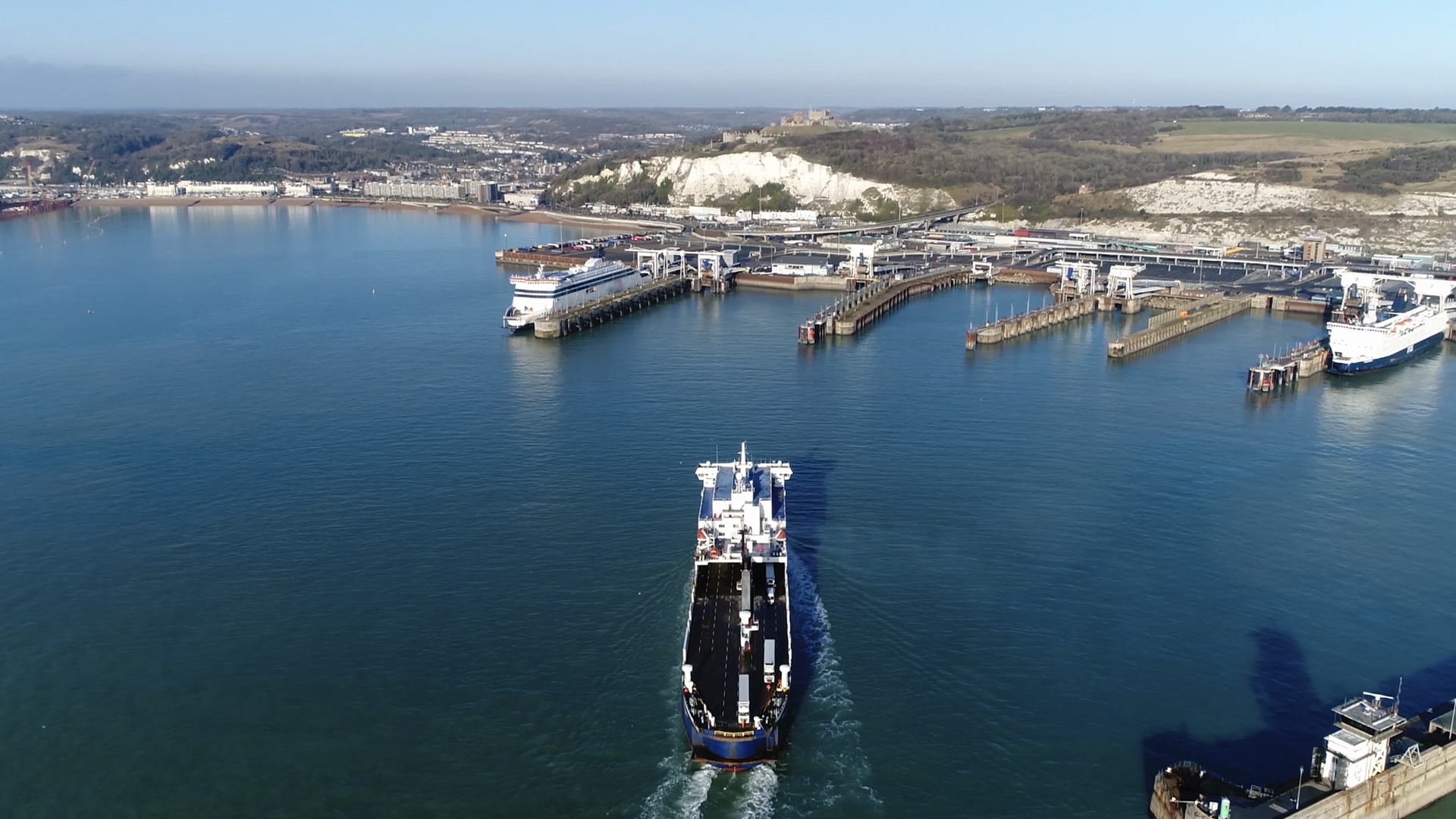
The Port of Dover.
Partners
Our industry partners in the Maritime and Road Freight Demonstrator include the Port of Dover, international shipping and logistics company DFDS, logistics operators Welch Group, Royal Mail and DHL, energy infrastructure specialist UK Power Networks Services, Britain’s National Energy System Operator (NESO) and engineering software specialist, Bentley Systems.
Our university partners in this demonstrator are University College London, Heriot-Watt University and University of Glasgow.
What’s the challenge?
Our research challenges at Dover span three areas – the ferries entering and leaving the port, the road freight into and out of Dover and the infrastructure of the port itself. Specific decarbonisation challenges across these operations include:
- Lack of space and electricity grid capacity at the port to charge electric trucks
- The cost and power needs of electric ferries
- How the port itself can manage energy needs and emissions
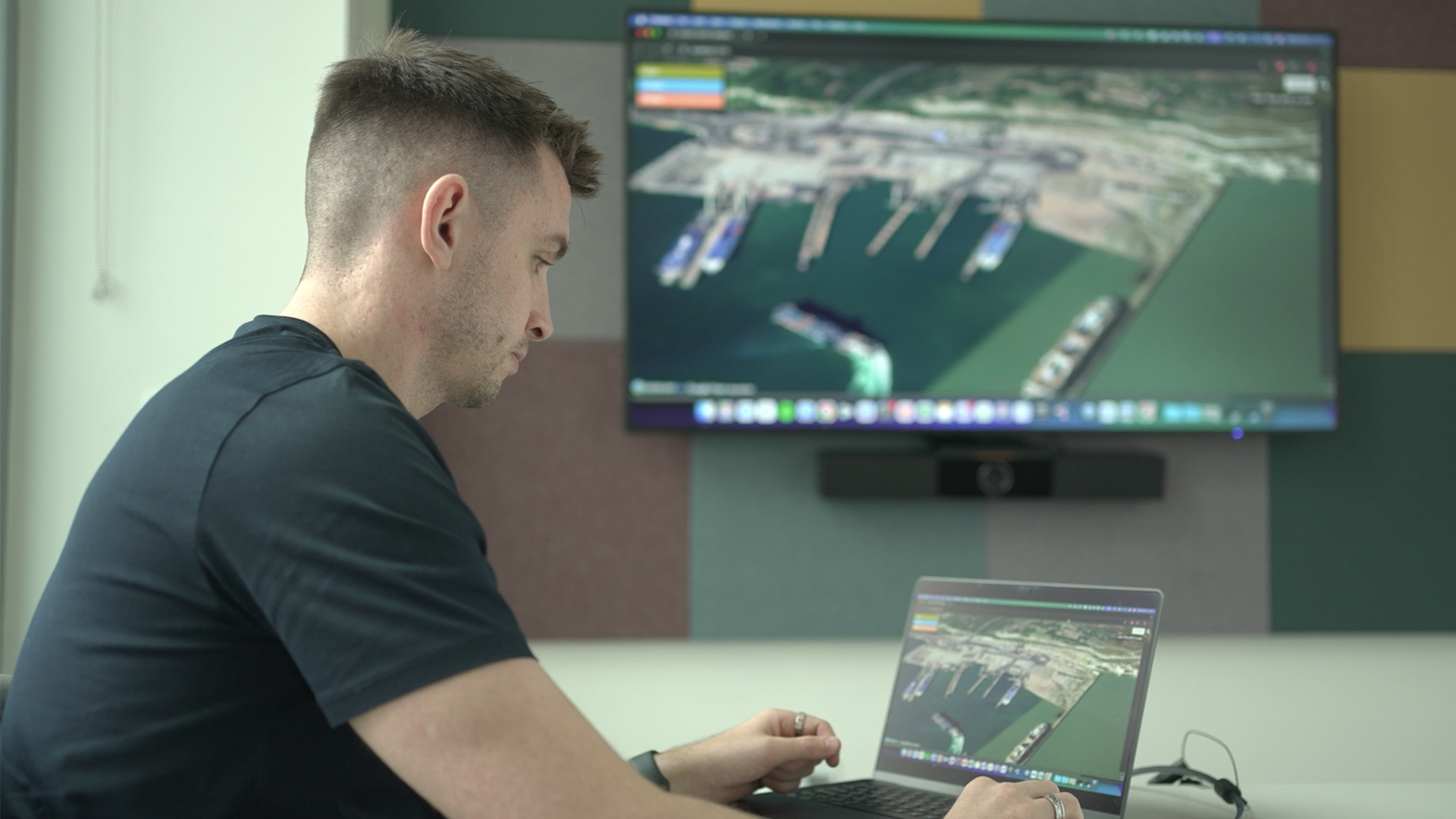
TransiT researcher Daniel Mitchell using visualisation software as part of his digital twinning research at the Port of Dover.
How is the demonstrator addressing this?
Our Maritime and Road Freight Demonstrator is using digital twinning and associated technologies to understand these challenges and to test different decarbonisation scenarios that are integrated across both maritime and road freight operations.
Using sophisticated simulation tools, our progress so far includes:
Building a simulation to represent the end-to-end movement of freight through Dover across its ferry, port and road systems
This model can answer questions including: How much energy would electric ferries and lorries need? And when and where could they charge?
Identifying critical locations for electric truck charging points on major road freight routes around Dover
Comparing different ferry emissions scenarios based on current gas and diesel marine fuels; a hybrid scenario with some ferry electrification and a fully electric fleet
Using 3D software tools to visualise potential future solutions, including ‘electric highways’ with overhead gantry lines to charge trucks
Calculating the costs, savings and environmental impact of road freight fleets and vessels staying diesel-operated or switching to fully electric vehicles
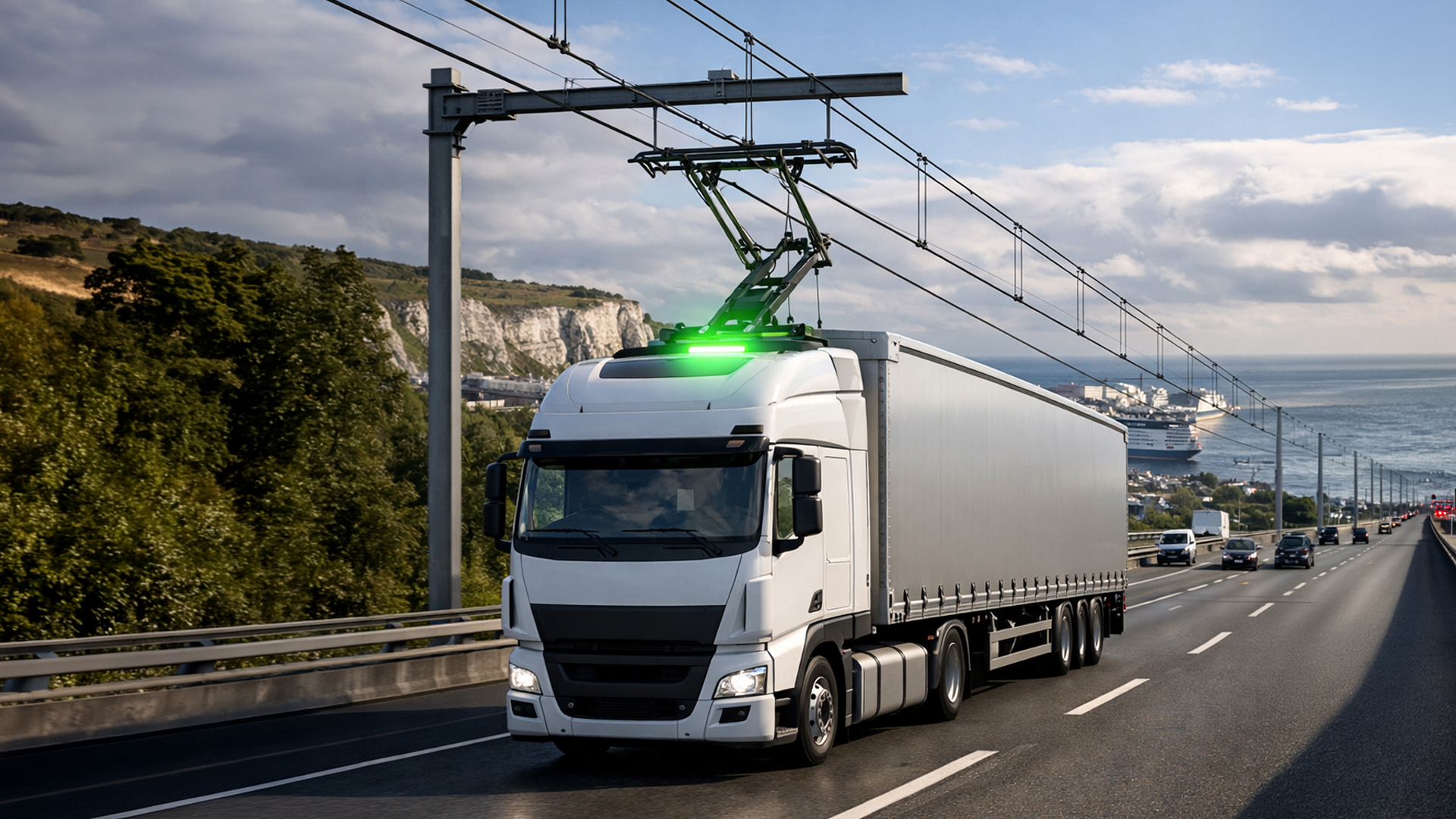
Visualisation of a truck on an ‘electric highway,’ powered by overhead cables, outside the Port of Dover.
What are the next steps?
Our next steps include:
- Collecting more data to enhance our simulations
- Further developing and testing our simulation tools
- Engaging with more stakeholders operating at the Port of Dover and beyond
How can I find out more?
For more information on TransiT, you can browse our website or get in touch via the Contact Us page.
For industry engagement enquiries, you can contact our lead Co-Investigator for this demonstrator, Nish Rehmatulla, or our stakeholder engagement manager Adam Kesby.