
Our Vehicle Digital Twin Demonstrator is creating a digital twin of a heavy goods vehicle and developing a separate generic road freight vehicle that can be used to simulate fleets and whole transport systems.
Partners
Our industry partners in the vehicle digital twin are retail and supermarket brand John Lewis Partnership and electric vehicle software specialist, Flexible Power Systems.
Our university partners in this demonstrator are University of Cambridge, University of Glasgow and Heriot-Watt University in Edinburgh.
We are also working closely with Project JOLT (Joint Operators Logistics Trial), a collaboration between industry and academic partners to trial electric heavy goods vehicles in real-world operations and share the learnings.
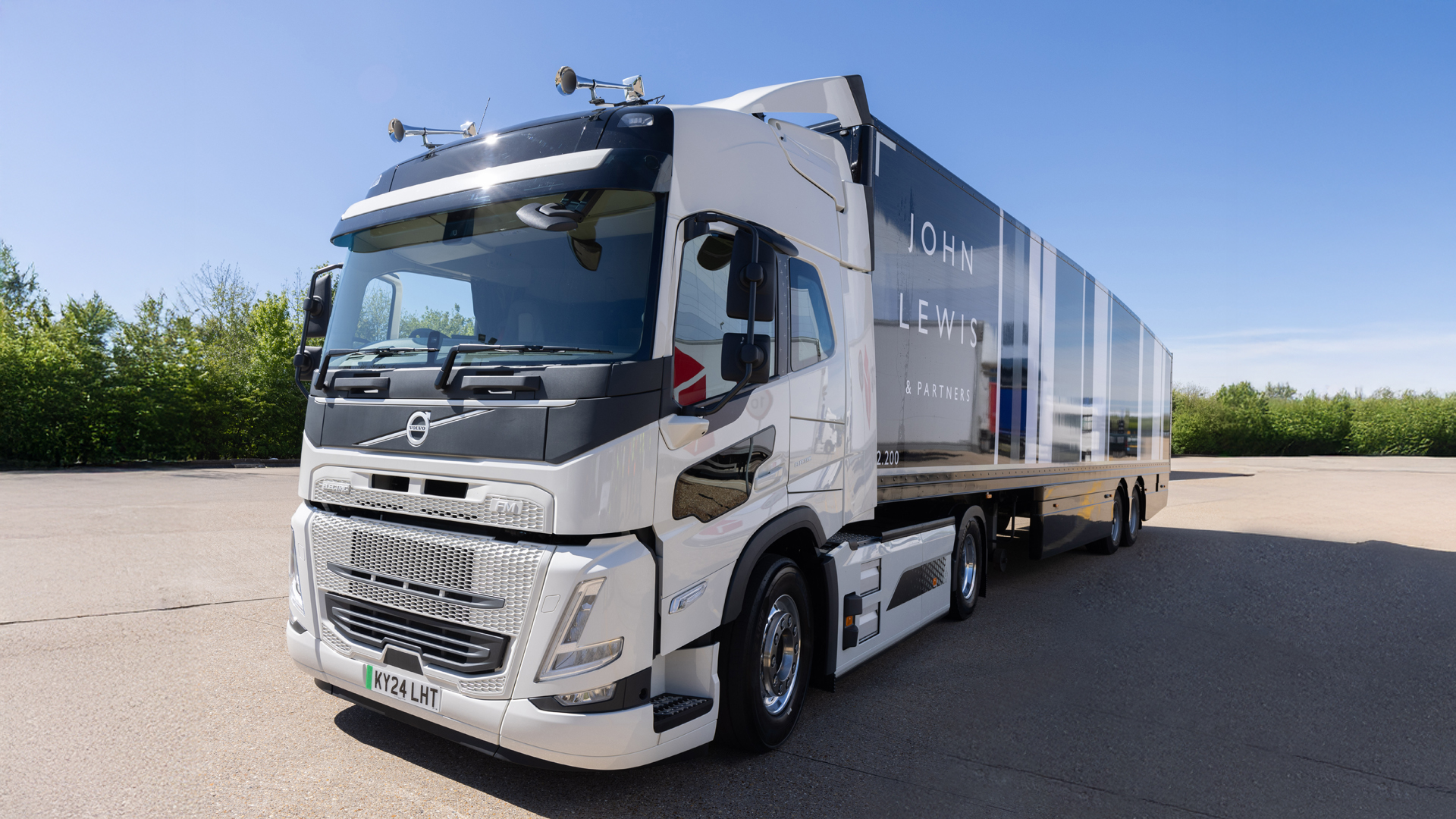
John Lewis is a partner in Project JOLT, which is trialling electric heavy goods vehicles. Photo by Project JOLT.
What’s the challenge?
The key research challenge in our Vehicle Digital Twin Demonstrator is how to remove the risk and uncertainty of investing in electric road freight vehicles. This includes:
- The higher up-front cost of battery-operated electric vehicles
- Load and range limitations compared to diesel vehicles
- The challenge of minimising the downtime and associated costs of charging stops
- Battery degradation over time and unknown maintenance costs, energy consumption and driver behaviour
How is the demonstrator addressing this?
By simulating vehicle performance, road conditions and driving behaviour, our Vehicle Digital Twin will help fleet operators and policymakers understand different transition scenarios. This includes:
- The cost of owning and operating electric trucks and vans
- Predictive maintenance to reduce downtime and improve resilience
- Where, when and how to charge, to minimise carbon emissions and cost
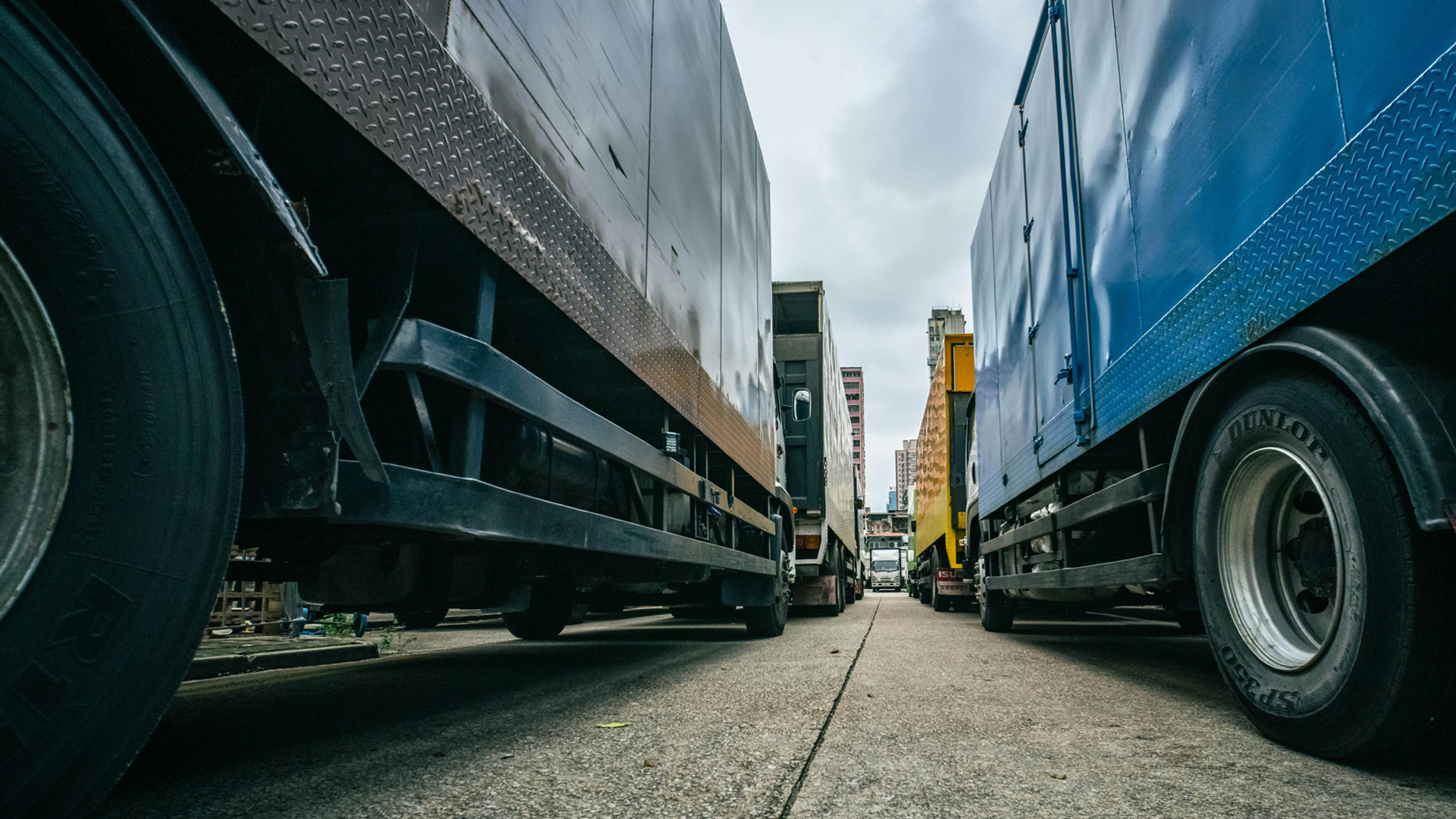
TransiT’s digital twins are helping researchers test vehicle performance variables including tyre resistance and aerodynamic drag.
Our progress so far includes:
Extensive data collection on electric vehicles and conventional comparator vehicles as part of Project JOLT. These include three vehicles being operated by John Lewis Partnership.
This collected data includes vehicle speed and location, engine/motor performance, driver pedal inputs, weather conditions and high-accuracy road elevation profiles as well as charging data.
Developing a data transfer mechanism to automatically retrieve data from the electric trucks and ingest this into Cambridge University’s vehicle database.
This is helping us to define performance variables in our vehicle digital twins related to tyre resistance, aerodynamic drag, driver behaviour, environmental factors (wind, rain, temperature), road topology, traffic and other factors.
Completing the development and testing of our generic road freight vehicle, which can be used to predict the energy consumption, carbon emissions and battery degradation of electric trucks.
What are the next steps?
Our next steps include:
- Integrating our generic road freight vehicle with other TransiT digital twins
- Simulating a fleet of heavy goods vehicles along different routes
- Producing detailed energy consumption and carbon emission data
How can I find out more?
For more information on TransiT, you can browse our website or get in touch via the Contact Us page.
For industry engagement enquiries, you can contact our lead Co-Investigator for this demonstrator, Xiaoxiang Na, or our stakeholder engagement manager Adam Kesby.