
Birmingham cricket fan travel helps researchers test new transport decarbonisation tool
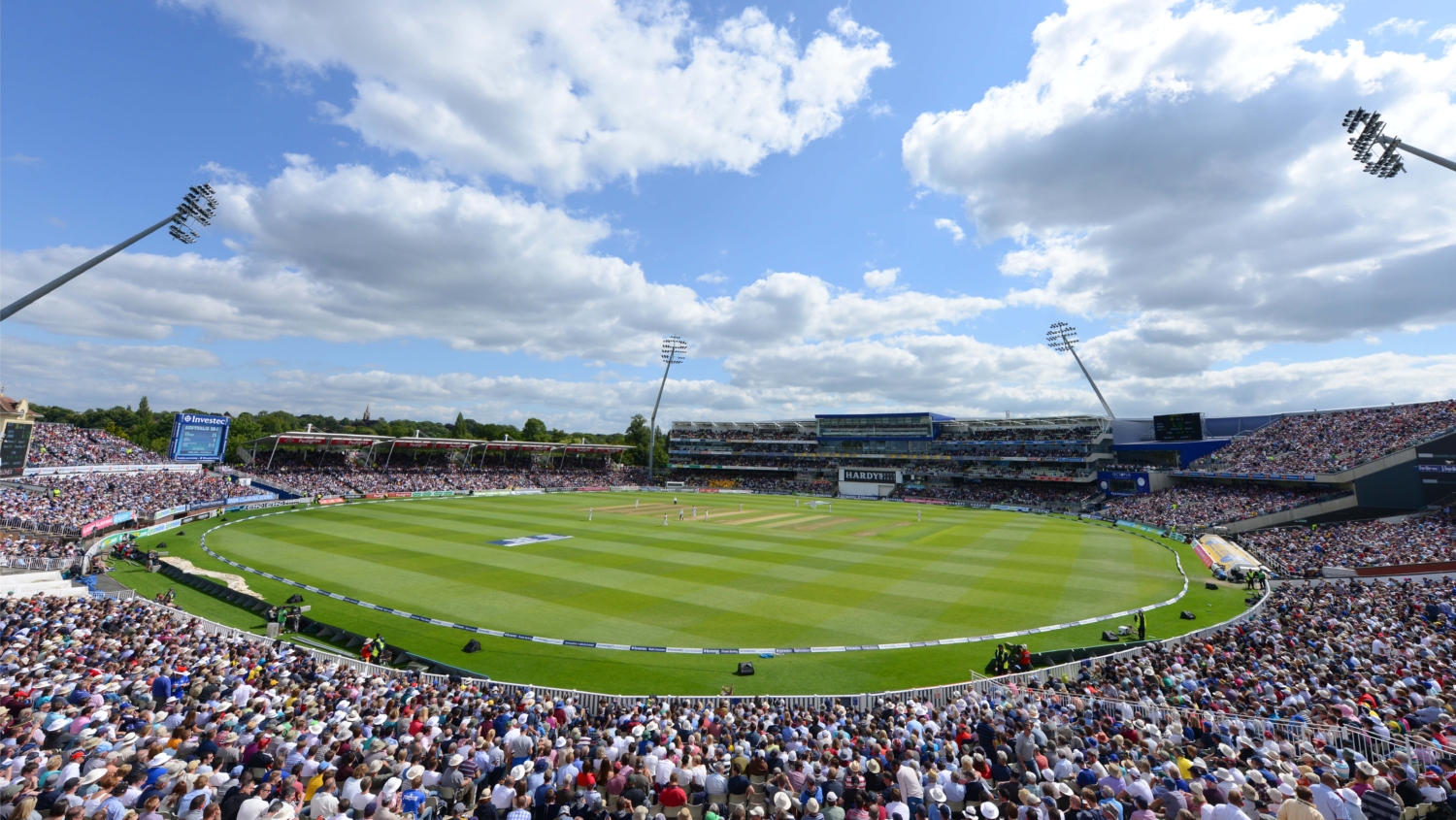
Cricket crowds travelling to Edgbaston Stadium in Birmingham are part of new research to help cities identify how and where to cut transport emissions.
Match day travel to the sports ground was used as a real-world scenario to test a new five-step approach to using digital twins to decarbonise transport.
Digital twins are digital replicas of the physical world that can be used to test different interventions and ‘what if’ scenarios.
Decarbonising transport in cities is complex. Digital twins can help us understand this complexity.
Dr Heather Steele, Durham University
The research, which is published in the journal Urban Science, was led by Durham University and will be used to help develop a prototype passenger transport digital twin of the West Midlands. This will incorporate different transport modes – including buses, trains and cycling – and is being built by TransiT, a UK research hub using digital twins to identify the lowest-cost, least-risky pathways to transport decarbonisation in the UK.

Heather Steele, a TransiT researcher and railway systems expert at Durham University.
Heather Steele, a TransiT researcher and railway systems expert at Durham University, explained: “Decarbonising transport in cities is complex. Digital twins can help us understand this complexity. But we need to know how planners would practically use them, starting with what real-world scenarios they want to test. Our five-step framework is designed to start bridging that gap, and travel to Edgbaston Stadium is one of the case studies we used to test our approach.”
Up to 25,000 spectators can arrive at Edgbaston on match days, and this accounts for up to 80% of total emissions from the event.
Although there are frequent bus services to and from the city centre to the stadium, the location is defined as a ‘transport desert,’ because the stadium is not well connected to other parts of Edgbaston or Birmingham. Railway stations on commuter lines are at least a half-hour walk away. And the neighbouring A38 trunk road can be affected by local road closures on match days.
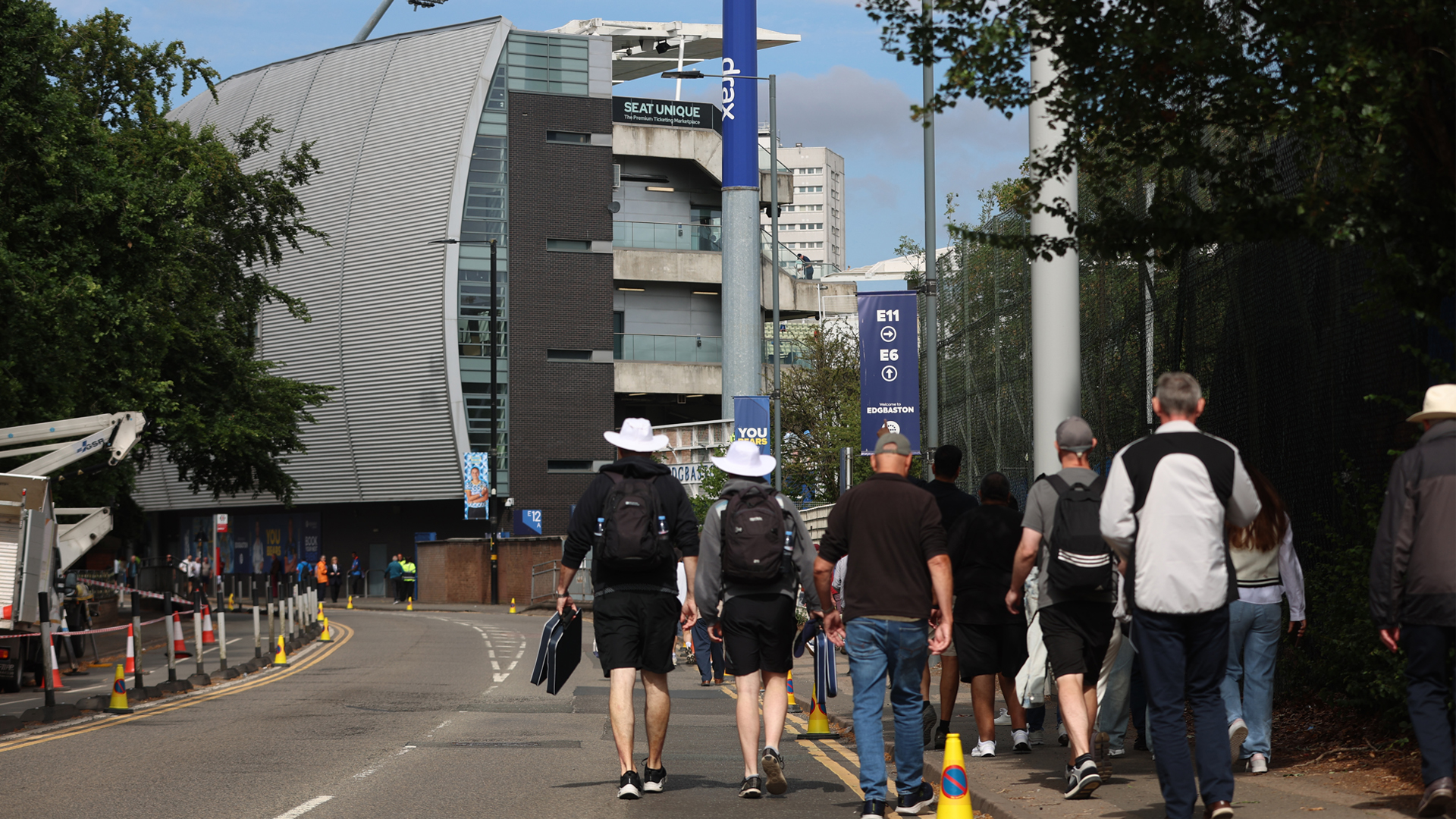
Cricket fans heading to Edgbaston Stadium. Photo courtesy of Warwickshire County Cricket Club.
Applying the new framework, researchers mapped out how a digital twin could support planners by testing transport service changes including:
- additional shuttle buses or rail‑bus interchange services
- revised match‑day road access
- park‑and‑ride options
- alternative active‑travel routes
- the impacts on local congestion and carbon emissions.
Real-time data sources, like bus occupancy, parking demand and road traffic data, would feed the digital twin with the information needed to make its analyses. Journey planning and real-time information systems could then be used to transmit information from the digital twin back to real-world transport settings, to help influence traveller behaviour.
The researchers describe their five-step approach as a ‘co-created’ framework that was developed in an industry workshop with local authority practitioners, transport planners, modellers and policy specialists.
Participants included experts from engineering consultancy WSP, local transport planners from Transport for West Midlands and Midlands Connect, and researchers from Heriot-Watt University in Edinburgh.
The framework identifies five aspects that need to be clearly defined when digital twins are being designed for transport decarbonisation. These are impacts, interventions, location types, data sources and feedback mechanisms.
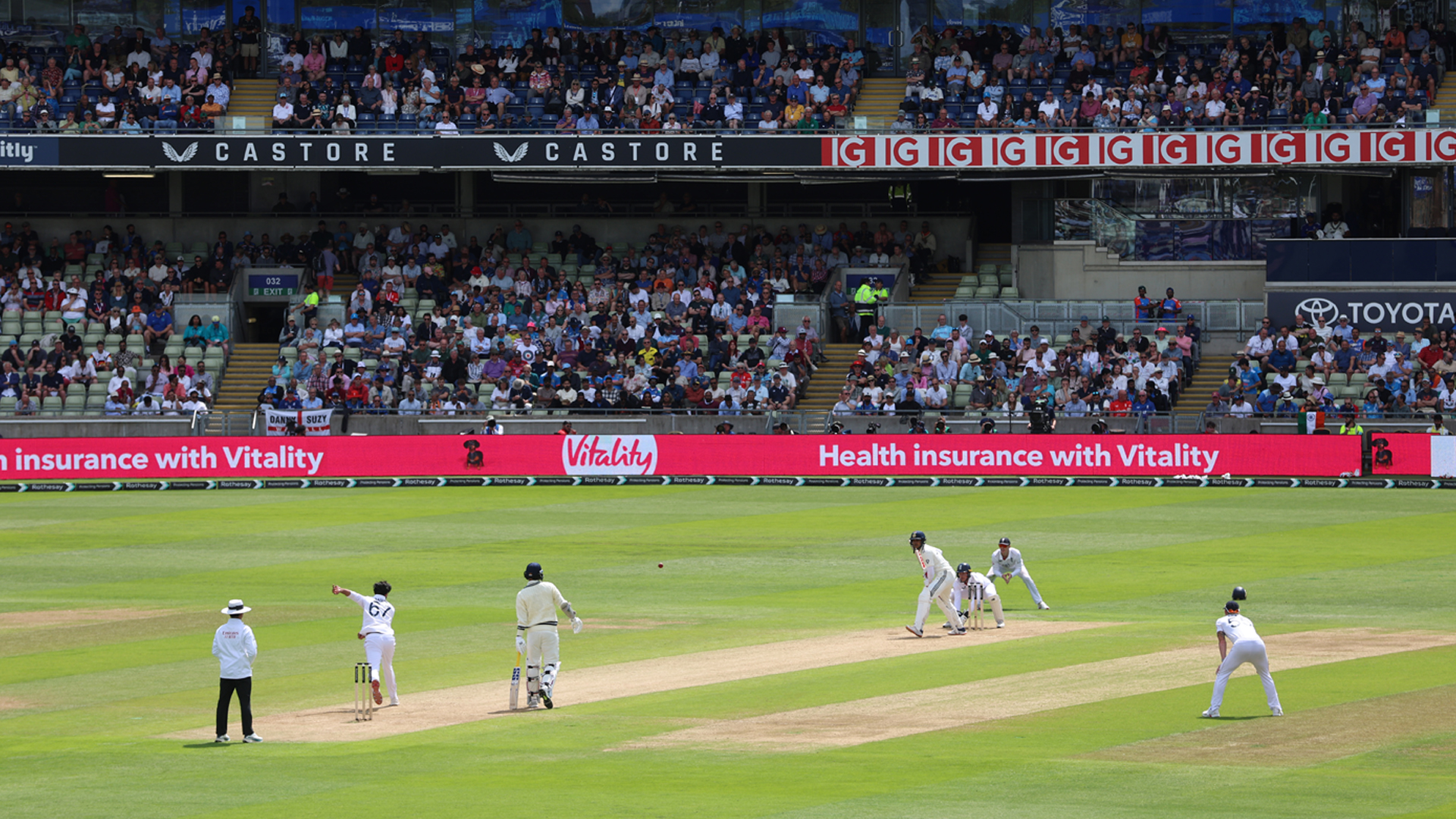
Cricket at Edgbaston. Photo courtesy of Warwickshire County Cricket Club.
For ‘impacts’, planners need to identify what real‑world outcomes they want to achieve. For example, switching from private cars to public transport; reducing congestion and improving travellers’ experience of public transport.
The ‘interventions’ aspect identifies concrete actions or policies that should be tested in the digital twin. For example, new rail stations, tram extensions, bus service redesign, mobility hubs, school or pedestrian right of ways, cycle infrastructure, parking charges, integrated ticketing and transport electrification.
‘Location types’ identifies where interventions should be introduced. This might be congested arterial routes, city centres, interchange hubs, rural to urban routes or school‑run corridors.
‘Data sources’ identifies what data could be included in a digital twin for urban transport decarbonisation. These could include smartphone or satellite data to understand travel patterns; vehicle, traffic and air quality sensor data; electric vehicle charging data and public transport occupancy data.
‘Feedback mechanisms’ identifies how the digital twin’s findings and instructions can be communicated back to real-world transport systems. Solutions might include live journey planning apps, passenger information systems and responsive traffic management.
The researchers believe their framework provides ‘the first step’ in developing a digital twinning ecosystem for transport decarbonisation, and hope their work will help other researchers in the field.
Their paper is entitled, A Co-Created Framework to Define Digital Twinning Use Cases for Urban Transport Decarbonisation.
The lead author is Heather Steele from Durham University. The co-authors are Joshua Duvnjak, John Easton and Phil Greening from Heriot-Watt University; Paul Byron and Melinda Matyas from WSP; Clive Roberts from Durham University and David Flynn from University of Glasgow.
TransiT is a collaboration of eight universities and almost 70 industry partners, jointly led by Heriot-Watt University and the University of Glasgow and funded by the UK Research and Innovation Engineering and Physical Sciences Research Council, the main funding body for engineering and physical sciences research in the UK.
