
Glasgow scientists say their digital twinning tool could transform network testing
A new way of testing computer networks that is 25,000 times faster than traditional approaches is being explored by researchers at the University of Glasgow.
As internet traffic and data volumes grow exponentially, the scientists say their approach could become a “practical, scalable and cost- effective” solution for the future testing and management of computer networks.
Shenjia Ding, a research student in Glasgow’s School of Computing Science, used automatically-generated digital twins – built with machine learning – to test two complex American and European computer networks with 12 and 37 nodes (data receiving and processing points) respectively.
“We’re demonstrating a very promising alternative to manual and time-consuming testing”
Shenjia Ding, University of Glasgow
The test included six different types of traffic, including web browsing, video streaming and file downloads, alongside continuous congestion and background noise to simulate real conditions.
The team’s digital twin took 4.78 seconds to accurately test the speed of the networks – while a traditional simulator used in the test took 33 hours.

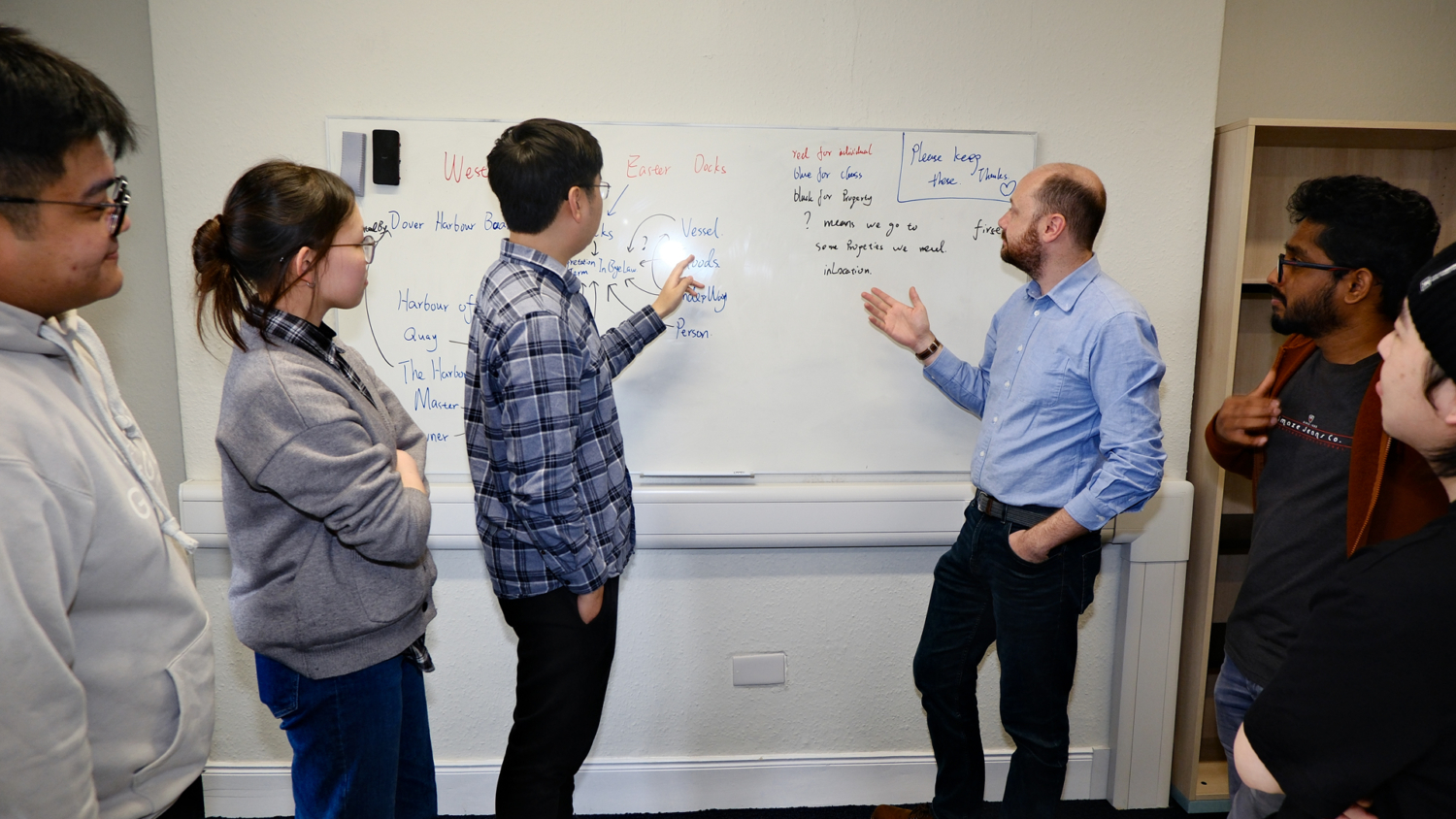
University of Glasgow research student Shenjia Ding.
“Our results show that testing computer networks with automatically-generated digital twins can achieve high accuracy and significantly faster speeds than traditional simulator-based testing ,” Ms Ding said. “We’re demonstrating a very promising alternative to manual and time-consuming testing that also relies heavily on professional expertise.”
Traditional network testing involves testing the performance, security and reliability of a computer network by using simulators to mimic real-world scenarios and data traffic.
The researchers used Automated Machine Learning (AutoML) to build their digital twin. AutoML accelerates the process of building machine learning tools and can be used by non-experts with limited machine learning expertise.
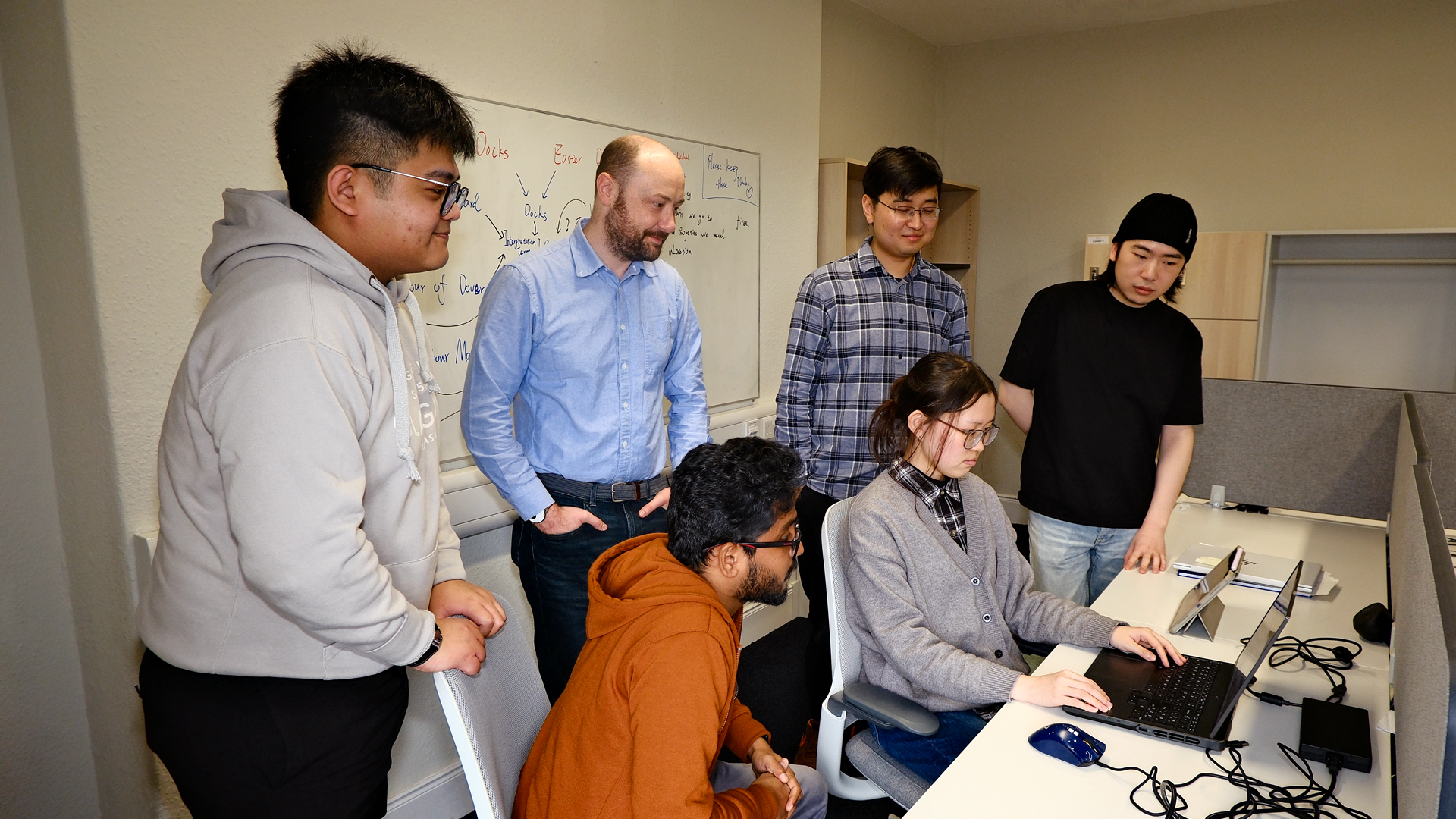
The University of Glasgow team in their lab.
Digital twins are digital replicas of physical systems or processes that are used to test and improve their real-world equivalents.
Paul Harvey, a co-author of the research and Senior Lecturer in Glasgow University’s School of Computing Science, said the work could also be used in other network settings, like transport.
“Transport, like computing, is seeing enormous growth in data volumes, and in both instances, the pressure on the communications networks carrying all this data is immense,” Dr Harvey explained.
“By proving that we can use machine learning to build digital twins – which is another time-consuming and laborious task – we are highlighting the huge potential of this research to also test and optimise transport – and other networks that we rely on daily.”
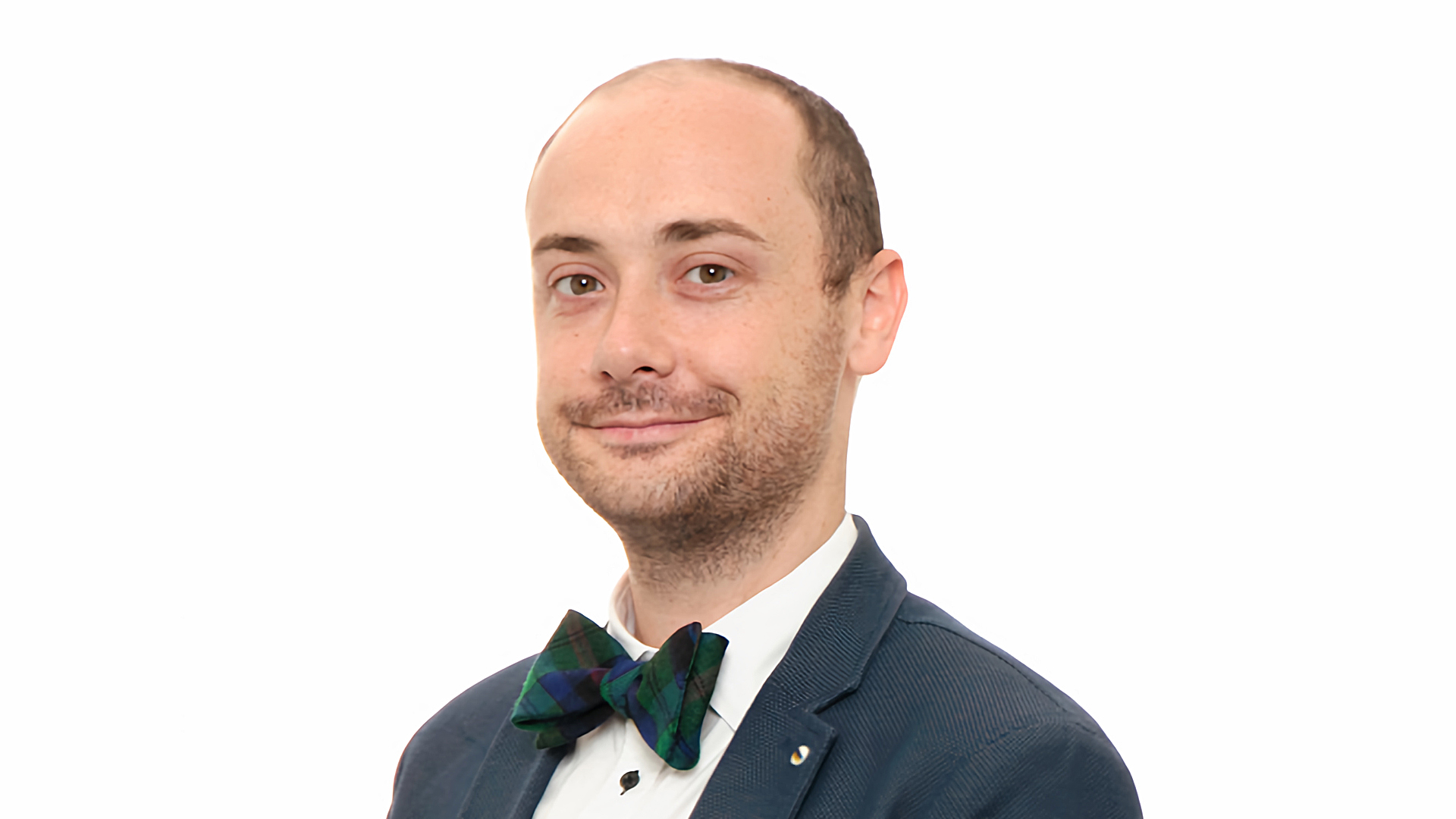
Paul Harvey, Senior Lecturer in Glasgow University’s School of Computing Science and Co-Investigator for TransiT.
Dr Harvey is a Co-Investigator for TransiT, a national research hub using digital twins and associated technologies to identify the fastest, least-risky and lowest cost pathways to transport decarbonisation in the UK. He said Ms Ding’s research could potentially support TransiT, particularly its goal of creating a ‘digital twin factory’ that can automate the production of digital twins for transport settings.
The researchers say their future work will focus on validating the digital twin’s update mechanisms and cost, assessing performance in real-time network environments, and conducting a comparative study across diverse network scenarios.
Ms Ding will present a paper on her work this month in Glasgow at the 2026 IEEE International Conference on Communications (ICC), one of the most important annual events in the telecommunications and networking industry.
The paper is entitled, Automated Digital Twin Generation for Network Testing: A Multi-Topology Validation. The co-authors of the research are Paul Harvey and David Flynn at University of Glasgow.
TransiT is a collaboration of eight universities and almost 70 industry partners, jointly led by Heriot-Watt University in Edinburgh and the University of Glasgow and funded by the UK Research and Innovation Engineering and Physical Sciences Research Council, the main funding body for engineering and physical sciences research in the UK, and supported by the UK government’s Department for Transport.

