

How transport experts at global consultancy WSP work with TransiT
Global engineering consultancy WSP features in a new case study published by TransiT, the UK’s national digital twinning hub for transport decarbonisation.
The case study outlines how experts in the business work with researchers at TransiT, with a particular focus on its passenger transport demonstrator in the West Midlands.
TransiT’s remit is to identify the fastest, lowest-cost pathways to transport decarbonisation in the UK using digital twins – digital replicas of the physical world.
“When we heard about TransiT, we thought it would be exciting to be part of it and to really feel that we’ve contributed to moving the industry forward.”
John Elphick, WSP
WSP is one of the world’s biggest professional services, engineering and science and technology consultancies, with around 73,000 employees in more than 50 countries.
Headquartered in Canada, the company helps its clients plan, design, engineer and manage projects in four key areas: transport and infrastructure; earth and environment; property and buildings and power and energy.

Jon Elphick (left) and Paul Byron from WSP.
WSP directors Jon Elphick and Paul Byron have been helping to advise the TransiT team since the early days of the research hub’s launch in 2024.
Jon Elphick is a Director in WSP’s Rail Digital Advisory group and is a control systems engineer by training and an expert in railway systems.
He said: “When we heard about TransiT, we thought it would be exciting to be part of it and to really feel that we’ve contributed to moving the industry forward.
“We would love to see developments that move forward the disciplines of transport planning and modelling. For example, TransiT’s goal of federating digital twins – linking multiple transport twins together into a single network – and hosting this in the cloud. This is a big break from the past, where typically lots of individual models sat as spreadsheets on consultants’ computers. So, to be able to move to something that was more collaborative and more easily accessible would be a revolution.”

WSP advises clients in areas including property and buildings, transport and energy.
Paul Byron is a Technical Director in WSP’s strategic modelling team and is a transport modeller with 35 years’ experience in the profession.
He said: “We’re very keen to see the development of digital twin models which use real time data on what’s actually happening in physical transport systems – as opposed to us as transport modellers taking a small sample and then trying to expand that to a massive population. A lot of our clients are very driven by this – particularly Transport for West Midlands and Midlands Connect – and we want to respond to that.”
Transport for West Midlands works with bus and train operators in the West Midlands to ensure that public transport is safe, reliable, affordable and accessible. It also owns and runs the region’s tram service. Midlands Connect develops transport projects across the Midlands which provide social, economic and environmental benefits.
Jon and Paul have been key intermediaries in helping TransiT work with these organisations, who are both involved in TransiT’s ‘Challenge-Led Demonstrator 2.’
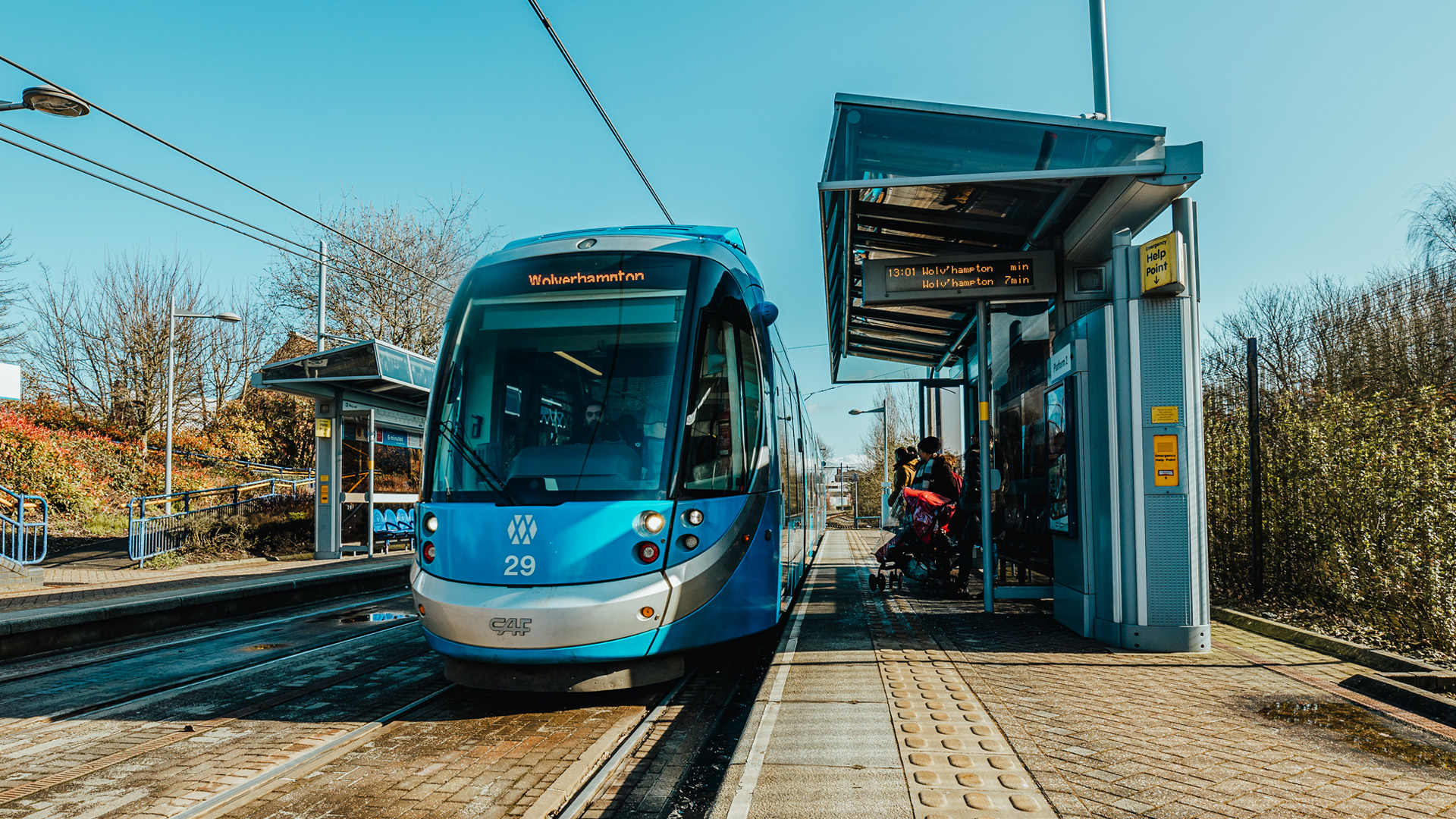
A tram on the West Midlands Metro. Photo by the West Midlands Combined Authority.
This is developing a passenger transport digital twin in the West Midlands, using data from rail, tram and bus services, public transport and car, cycle and taxi use.
The twin will help policymakers and transport planners identify what interventions would be most effective in shifting travel behaviour towards public transport and active travel choices like walking and cycling.
WSP’s work with TransiT includes reviewing research, advising on best practice and taking part in workshops and monthly meetings.
Jon and Paul say the benefits of the collaboration include being able to share digital twinning knowledge that can help clients and researchers in the wider industry, and having shared decarbonisation goals.
TransiT rail industry expert John Easton, a Professor of Sustainable Transport at Heriot-Watt University in Edinburgh and an Honorary Professor at the University of Birmingham, said WSP’s insight was invaluable.
“We are hugely grateful for the expert insight that the team at WSP bring us,” Professor Easton said. “Jon and Paul have many years of experience between them and their knowledge and connections add tremendous value to our work here at TransiT.”
TransiT is a collaboration of eight universities and almost 70 industry partners, jointly led by jointly led by Heriot-Watt University in Edinburgh and the University of Glasgow, and supported by the UKRI Engineering and Physical Sciences Research Council (EPSRC), the main funding body for engineering and physical sciences research in the UK.

