

Top UK security visit for TransiT team at University of Glasgow
Transport and energy researchers at TransiT and University of Glasgow are attracting growing interest for their expertise in securing critical national infrastructure.
Critical national infrastructure includes defence, emergency services, energy, finance, food, health, transport, water and other systems that support the delivery of essential services.
High-level briefings have included a visit to University of Glasgow by one of the UK’s most senior security officials.
Strengthening the UK’s critical national infrastructure and cyber defences has never been more important.
Vincent Devine, Government Chief Security Officer for the UK Government
Vincent Devine, Government Chief Security Officer for the UK Government, joined a presentation on digital resilience by TransiT Co-Investigator and cybersecurity specialist Dimitris Pezaros.
Professor Pezaros gave an overview of research on securing critical national infrastructure systems in industry. This included integrating artificial intelligence and machine learning, organisational security practices and standards development.
Professor David Flynn, TransiT joint programme lead and an expert in cyber physical systems, also provided insight into TransiT and future-focused research on secure energy networks and their interdependencies with other critical sectors.
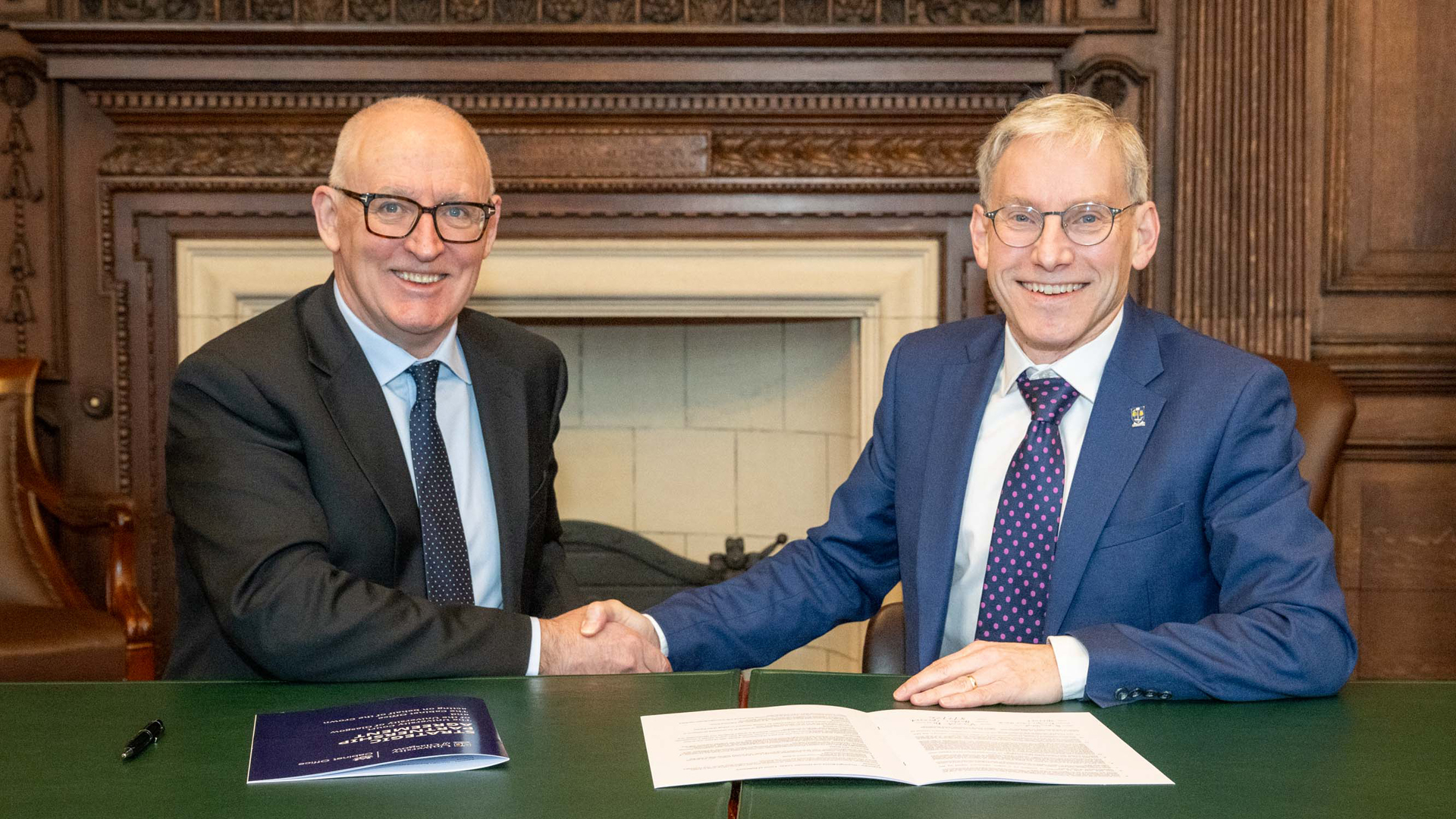
Vincent Devine (left), Senior Sponsor for the Cabinet Office in Scotland and Government Chief Security Officer, and Professor Andy Schofield, Principal and Vice Chancellor of the University of Glasgow.
TransiT is a national research hub focused on using digital twins – digital replicas of the physical world – to rapidly decarbonise transport in the UK, including road, rail, air and maritime, across both passenger and freight.
The Government Chief Security Officer (GCSO) leads the Government Security Function, which seeks to build the capacity and capabilities of security professionals across UK government departments, covering physical, human and information security. The GCSO is also Director General of the Government Security Group within the Cabinet Office, which is responsible for the oversight, coordination and delivery of protective security within all central government departments, their agencies and arms-length bodies.
Mr Devine is a University of Glasgow graduate and has worked in the civil service since 1993, in a wide range of security and national security roles, including postings in the Balkans, Ukraine and Northern Ireland.
He said of his visit: “Strengthening the UK’s critical national infrastructure and cyber defences has never been more important. Research here in Scotland and across the UK is delivering new capabilities in this area, so it’s vital that we understand what these are and what role they can play.”
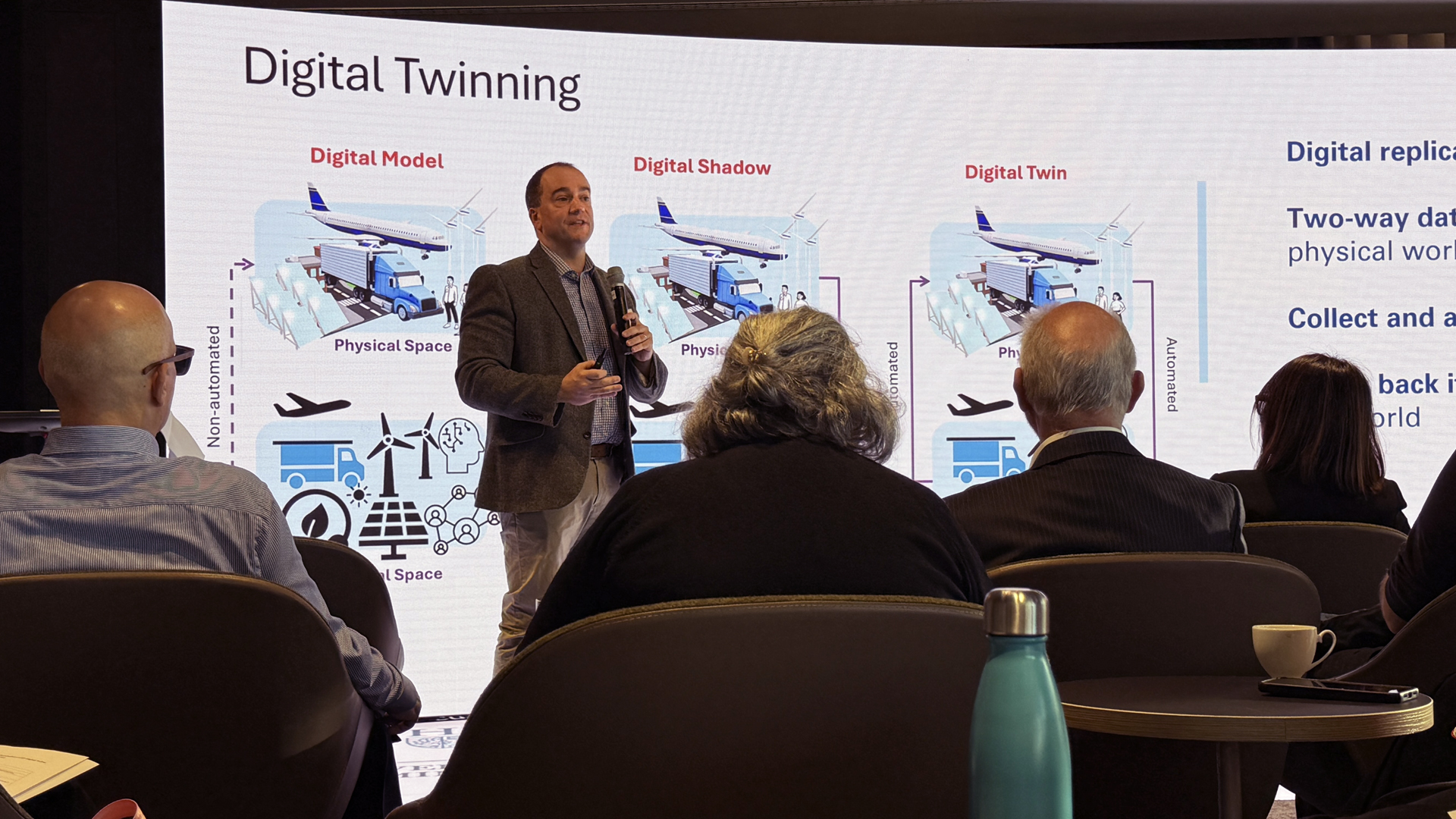
Professor David Flynn presenting at a TransiT event.
Professor Flynn said: “Our work in TransiT has highlighted how reliant the UK is on its transport and energy systems, and how interconnected these critical systems are. For example, to decarbonise transport, we need a secure electricity supply to charge electric vehicles. That’s why cyber security and resilience are a key focus of our research – to strengthen our defences against cyber attacks and other risks that could disable this critical national infrastructure.”
During his visit to University of Glasgow, Mr Devine also heard about a proposed Critical Technologies Nanofabrication Facility (CTNF) and its role in strengthening the UK’s capability in quantum, semiconductor and advanced manufacturing technologies.
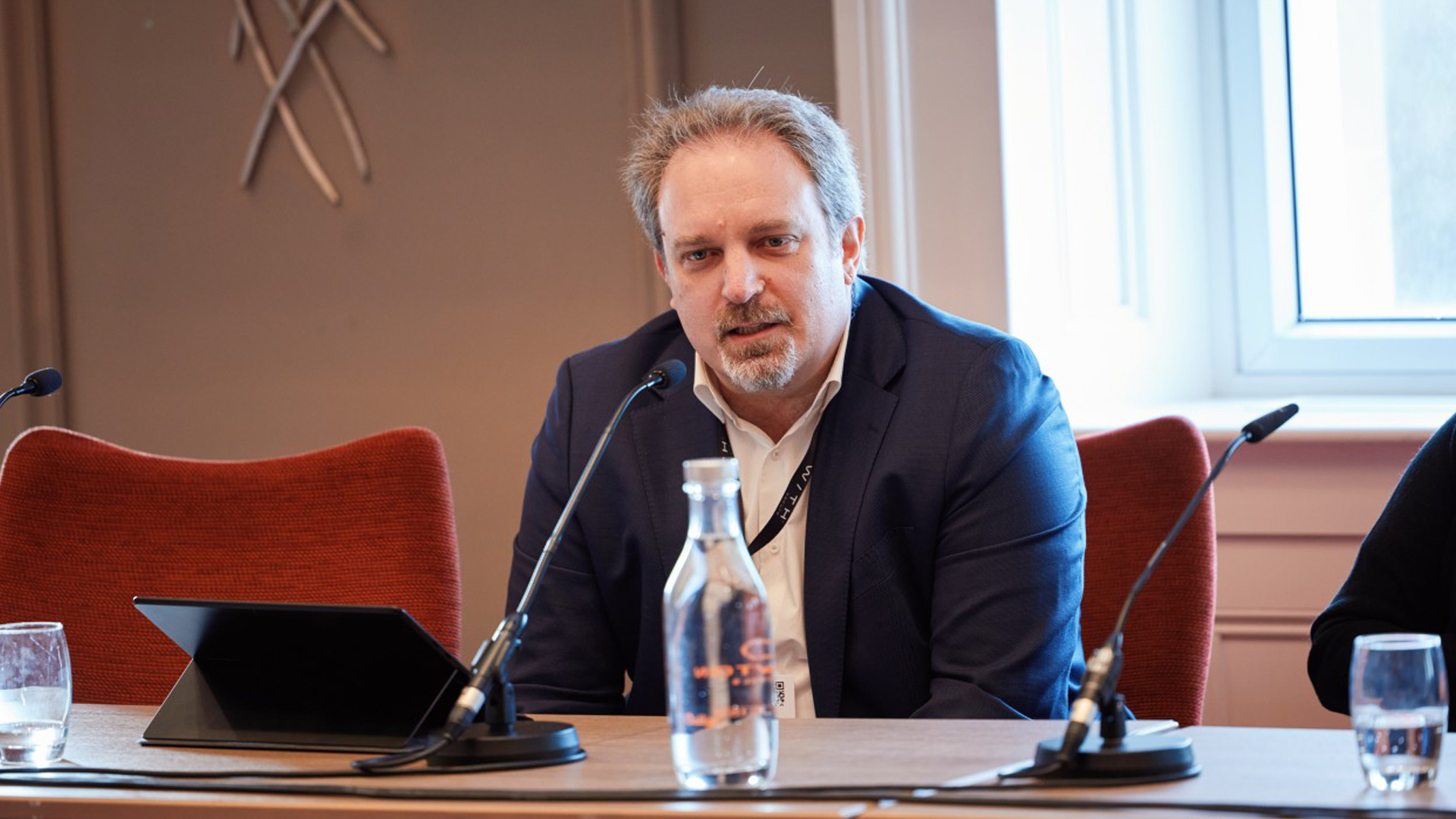
TransiT Co-Investigator and cybersecurity specialist Professor Dimitris Pezaros.
The Cabinet Office supports the UK Prime Minister in the effective running of government and is the corporate headquarters for the UK government. The Cabinet Office has its second headquarters in Glasgow, alongside the Scottish headquarters of HM Revenue and Customs.
Research briefings were also attended by Euan Birch, head of cyber security at SP Energy Networks, who explained the priorities and challenges faced by electricity network operators, and the value of academic-industrial partnerships in building UK capabilities and future workforce readiness.
Last month, University of Glasgow signed a Strategic Partnership Agreement with the Cabinet Office to strengthen policy engagement, support skills development and create impact within the greater Glasgow community.

