
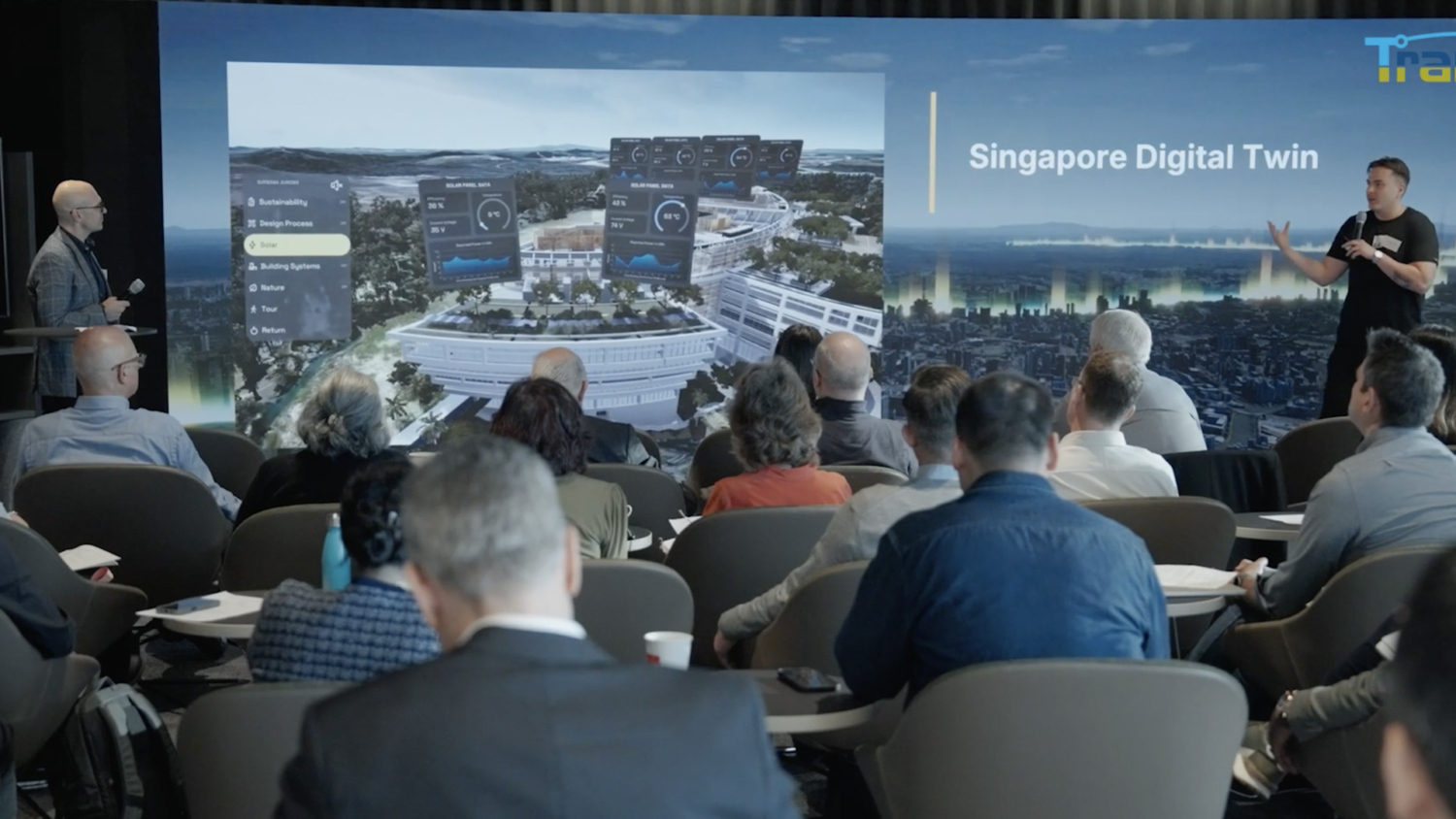
Transport decarbonisation event showcased in a new TransiT film
A new film celebrating the success of a recent industry event has been published by TransiT, the UK’s national Digital twinning hub for transport decarbonisation.
The film was produced at a TransiT stakeholder engagement event in London at the UK headquarters of infrastructure software specialist Bentley Systems.
The event, Derisking freight transport decarbonisation with digital twins – an introduction to TransiT, brought together around 60 guests to hear about some of TransiT’s visualisation, modelling and policy work. Watch our film below.
Digital twins are digital replicas of the physical world that can be used to test systems and scenarios much faster and more affordably than in real world trials.
TransiT joint director David Flynn said: “Our mission at TransiT is to develop a national digital twinning playbook, that will empower stakeholders to identify the optimal choices in decarbonising our critical transport networks and services. Our digital twinning will be co-created with our partners and developed through a network of Challenge-Led Demonstrators.”
Daniel Mitchell, a TransiT researcher and visualisation specialist, presented at the event and explained: “As we create some of our digital tools, it’s important to get stakeholder feedback so that we can then redesign this into our systems that we’re going to use in the future.”
TransiT’s researchers are using Bentley Systems software to create visualisations of future decarbonised transport networks.
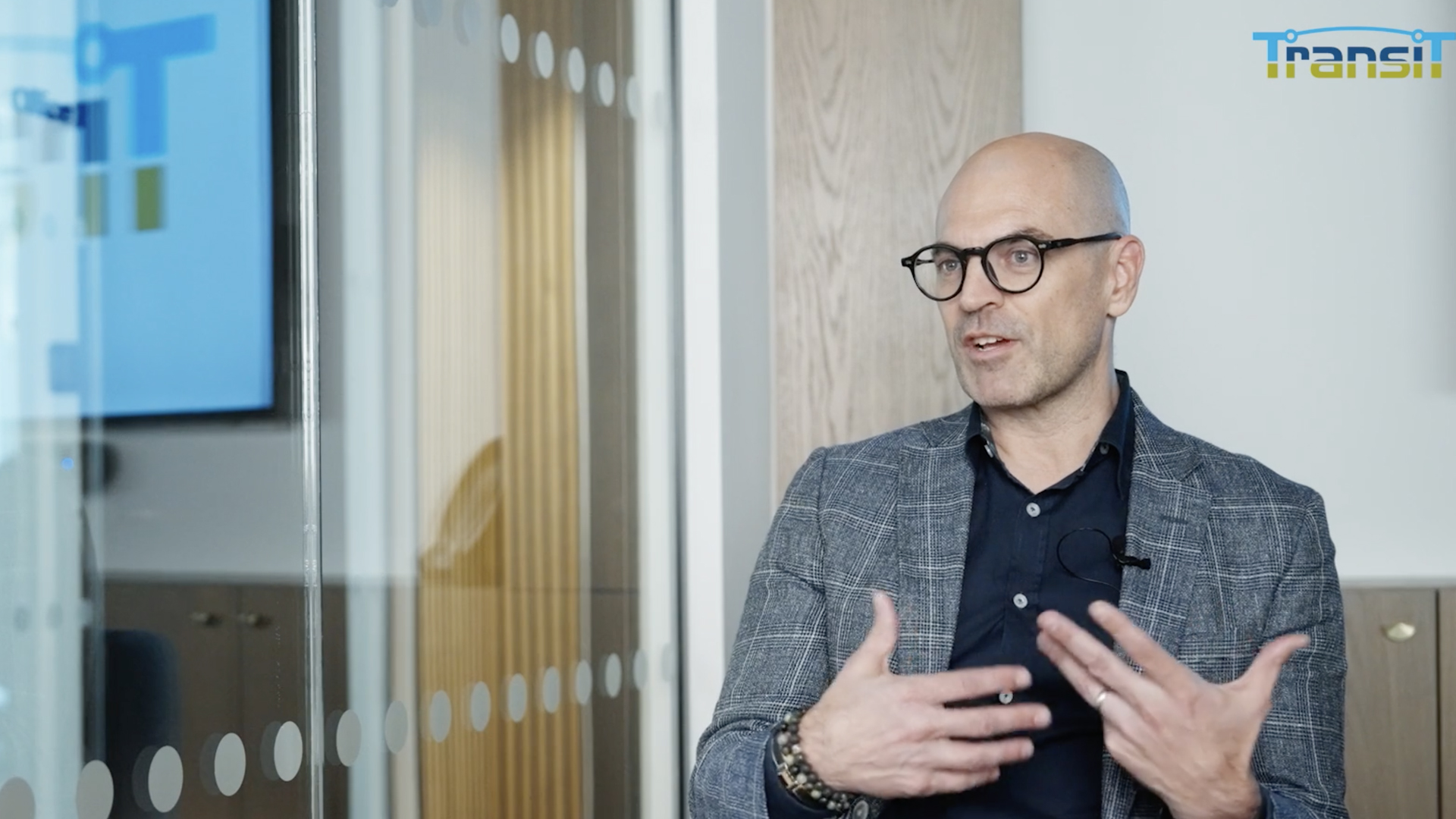
Greg Demchak, Vice President of Emerging Technologies at Bentley Systems.
Greg Demchak, Vice President of Emerging Technologies at Bentley Systems, showcased the company’s software at the event and explained: “What we’ve been looking at is how to make it easy for people to tell stories about up-and-coming infrastructure projects – what’s called digital twins, 3D models, plus data, merging together into this kind of immersive storytelling environment.”
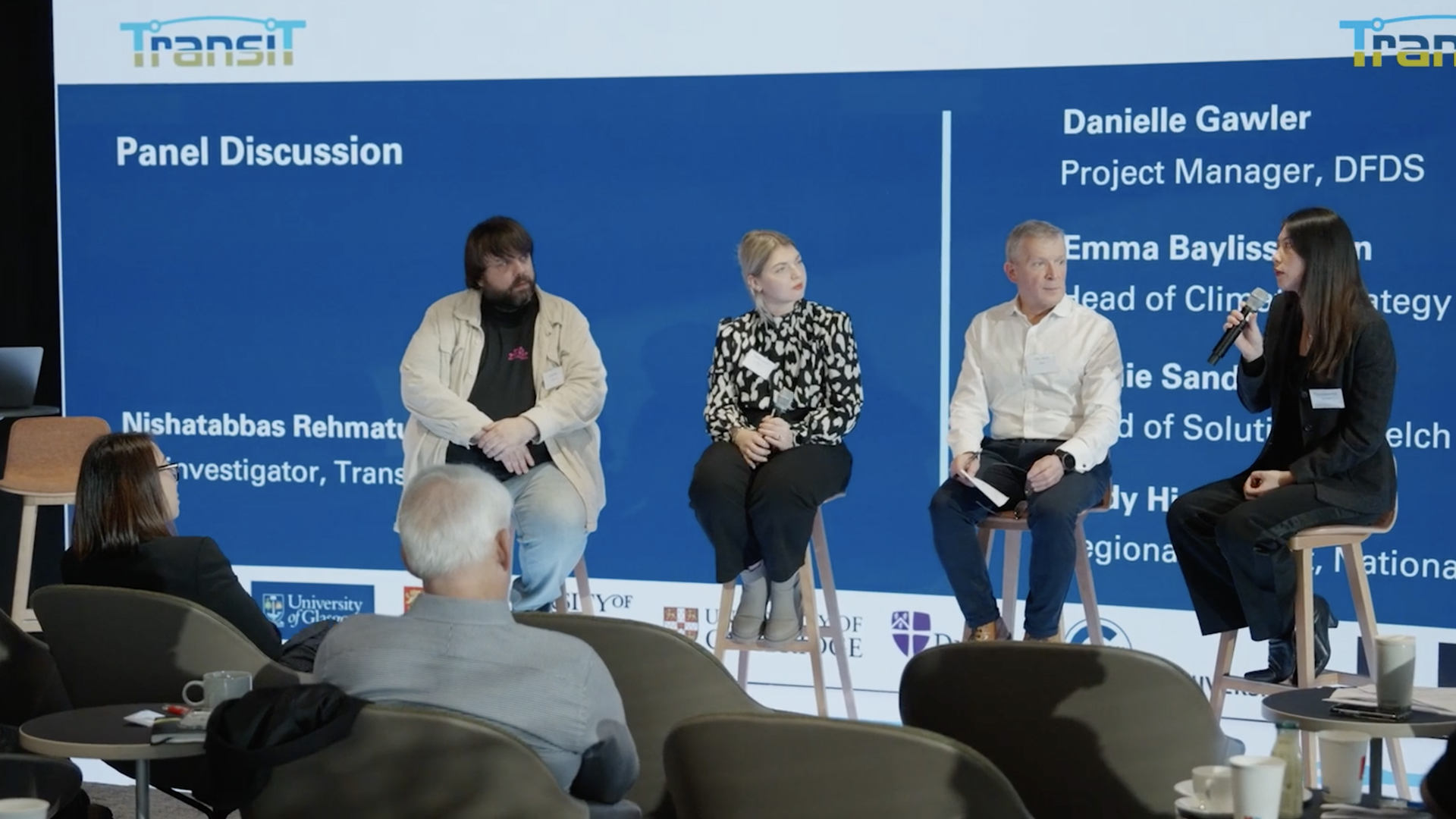
Speakers on TransiT’s industry panel at the event.
Guests at the event included specialists from Connected Places Catapult, DFDS, Royal Mail, Welch Group, National Energy System Operator (NESO), Port of Dover, Digiflec, DNV, Jacobs, JLR, Kaunas University of Technology in Lithuania, Mott MacDonald, SSEN Transmission, Stantec and WSP.
Emma Bayliss-Chan, Head of Climate Strategy & Risk at Royal Mail, said the event showcased how digital twin technologies could be used in transport decarbonisation, for example, by helping to identify find the right locations for charging infrastructure or grid infrastructure upgrades.
Andy Higham, a Regional Analyst at the National Energy System Operator, said: “Today’s been really helpful to see the digital innovation, the use of academia in exploring the art of the possible in helping industry and UK plc transform itself, ready for decarbonisation.”
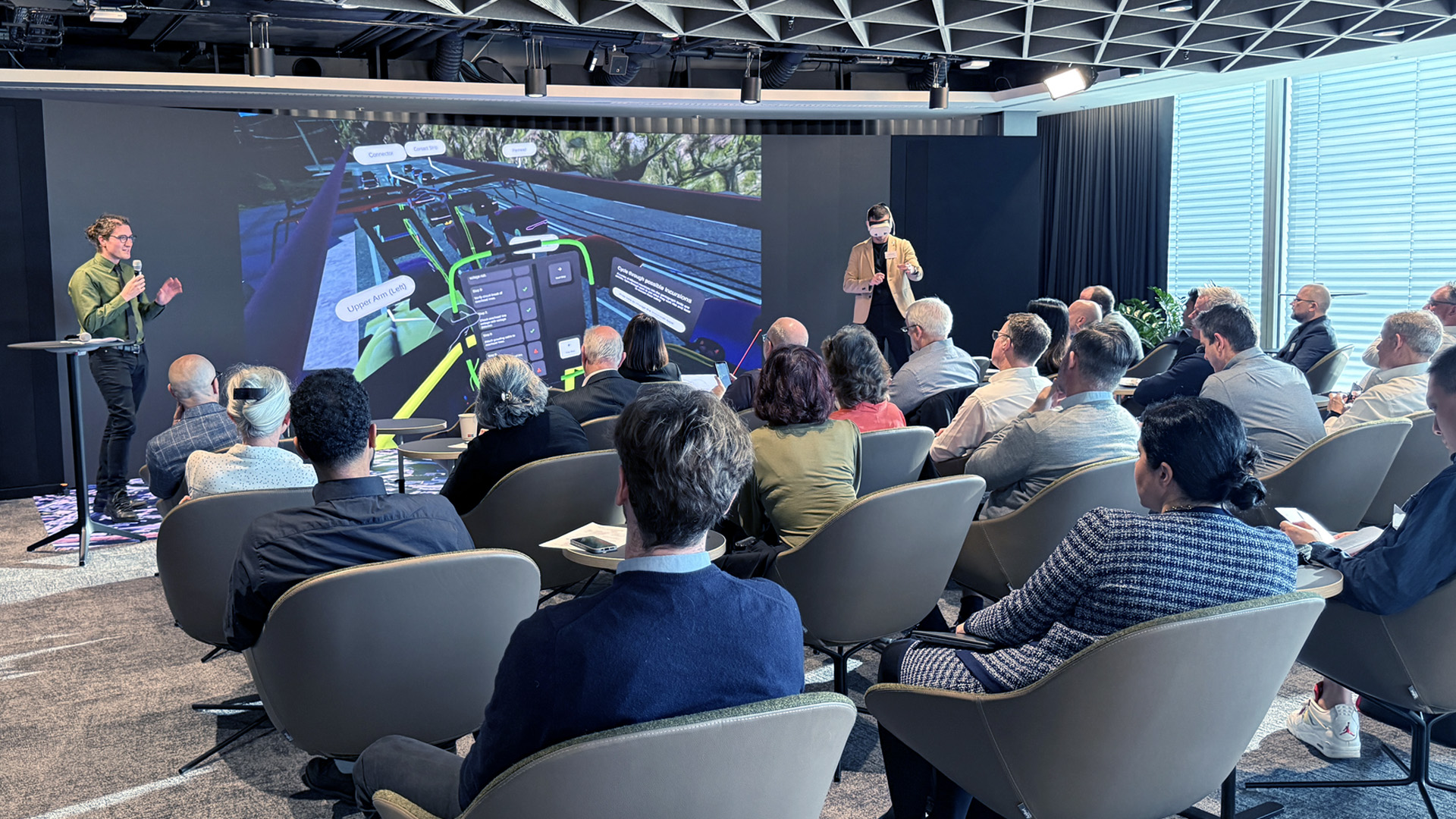
TransiT researchers Andrew Goodsell and Daniel Mitchell showcasing virtual reality visualisations.
TransiT is a collaboration of eight universities and almost 70 industry partners, jointly led by Heriot-Watt University in Edinburgh and the University of Glasgow and funded by the UK Research and Innovation Engineering and Physical Sciences Research Council (EPSRC), the main funding body for engineering and physical sciences research in the UK.
TransiT’s university partners are University of Leeds, University of Birmingham, Cranfield University, University College London (UCL), University of Cambridge and Durham University. Our maritime team is based at the The Bartlett School of Environment, Energy and Resources, UCL.

