
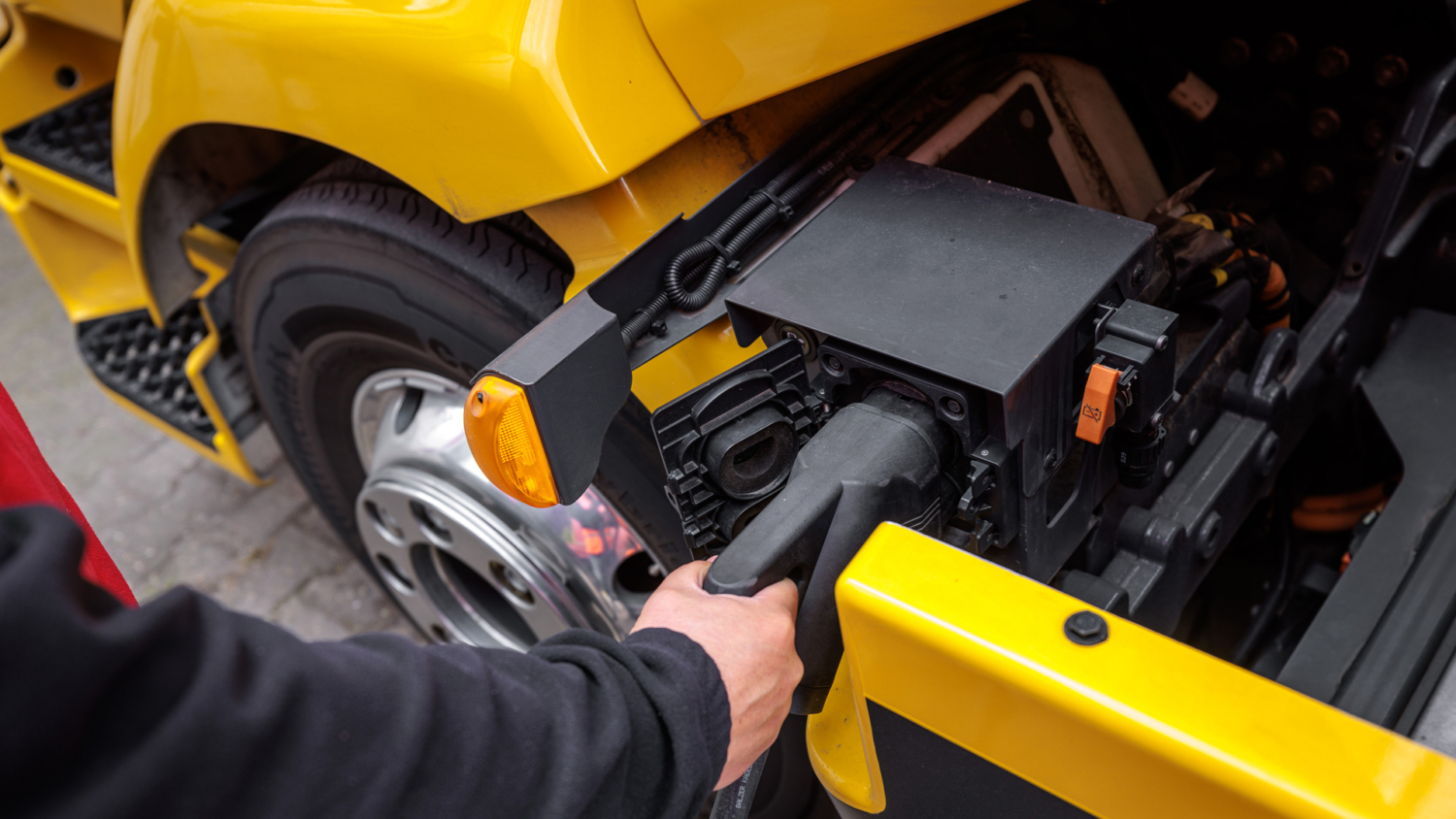
Electrifying road freight
Dr Parth Deshpande is a TransiT researcher and road freight electrification specialist based in the Department of Engineering at the University of Cambridge. We asked him about his work.
What’s your role at TransiT and what does this involve?
I’m a research associate working at the University of Cambridge as a part of TransiT’s Vehicle Digital Twin Demonstrator. We’re using our understanding of electric heavy goods vehicles (HGVs) to support the other TransiT teams. In particular, I’ve been focusing on areas like the energy consumption of electric HGVs, which is important for planning journeys and understanding the business case. We’re also looking at how electric HGVs compare with diesel HGVs, and what would it take for us to have a complete rollout of electric HGVs in the current logistics ecosystem.

Dr Parth Deshpande
What’s your background?
My undergraduate degree was in engineering design and then I specialised in automotive engineering for my master’s degree. Both were at the Indian Institute of Technology in Madras, southern India. Then I did some work for Jaguar Land Rover, before doing my PhD here at the University of Cambridge with the Centre for Sustainable Road Freight. This looked at how we combine vehicle engineering with logistics to answer the question of what it takes to roll out electric HGVs. I have been fortunate to work in a highly interdisciplinary area covering topics such as economics and logistics, which has been a key theme throughout my work.

University of Cambridge. Photo by Jean-Luc Benazet on Unsplash.
What research are you working on?
There are two broad areas to my research. The first involves modelling the behaviour of electric HGVs, for example energy consumption, and sharing this with other TransiT teams who need to simulate electric HGVs in their models. We’re doing this by developing an application programming interface (API), which will basically allow researchers to reach out to our programme and take usable insights from it. We have now released the first few versions of the API, and continue to work on enhancing it by adding more nuanced features.
The other stream that I’m working on is a logistics comparison of electric and diesel heavy goods vehicles. This includes looking at the payload penalty – where the weight and size of the battery in an electric HGV reduces how much weight it can carry compared to a diesel HGV. There’s a time penalty as well, because electric trucks need to stop and charge. We’re trying to establish the impact of these penalties on the cost of logistics, and how much extra it costs to run an electric HGV.
We’re collecting real-world data on this from an electric HGV trial funded by industry, called Project JOLT, which is short for Joint Operators Logistics Trial. Fleet operators get to trial one of five electric heavy goods vehicles that manufacturers have donated in kind, and we collect and analyse the data from these vehicles for different types of logistics.
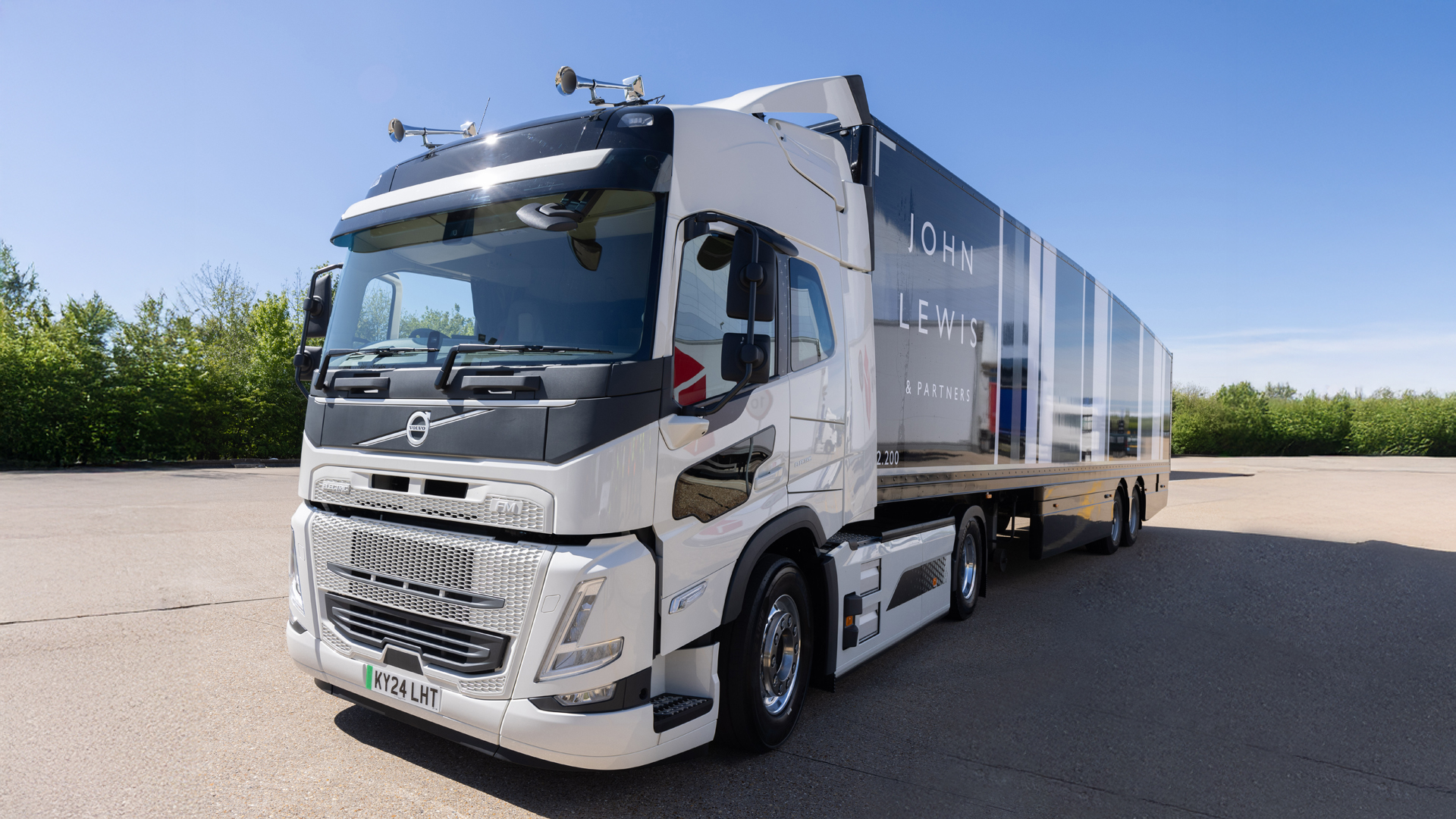
An electric Volvo truck. Photo courtesy of Project JOLT and John Lewis Partnership.
What do you hope to achieve at TransiT?
I really hope to be able to convert the hypotheses and ideas that I’ve been developing through my PhD and through the past year in this role to real-life studies and applications. It’s one thing to develop models and theory by myself, but it’s certainly more satisfying to see it implemented as a digital twin in all the various TransiT models, and also in practice on the ground.
I think the ultimate achievement would be to understand what the key issues are with electric HGVs, and why operators aren’t already using them. If we can answer questions like these through TransiT’s digital twin models, that would help us find solutions to decarbonise road freight transport faster.
