
Our Federated Digital Twin Demonstrator will integrate our road, rail, air, and maritime digital twins into an interconnected network. This ‘federated’ system of independent, but linked, digital twins, will be used to test decarbonisation solutions that could be applied across the whole UK transport system.
What is federation?
Federation is a group of individual systems that have joined together to form a larger ecosystem. It allows individual digital twins to form a new, broader digital twin, where the individual components may share data and insights with each other, while keeping their autonomy, security and privacy.
Federated digital twins can go beyond the sum of their parts, and provide analyses and insights that an individual digital twin can’t.

A visualisation of digital connections at East Midlands Airport.
Timescales
Federation will be the focus of TransiT’s final research phase, towards the end of our five-year funded term in 2029, and will follow the creation of our place-based digital twin demonstrators at Port of Dover (Maritime and Road Freight), the West Midlands (Passenger Transport) and East Midlands Airport (Air and Road Freight).
What’s the challenge?
Transport is complex, fast-moving and fragmented, with many different systems, standards, operators and users. This makes decarbonisation particularly challenging – because it’s difficult to test potential solutions across the whole system. Federated digital twins can address this and provide reliable and scalable support to decarbonisation decision-making. But challenges remain. These include:
- Connected digital twins are an underexplored area still in the early stages of development
- While many useful digital twins exist, they lack interoperability and standardised ways of communicating
- System-wide transport simulations face barriers including high cost, slow speed, uncertain results and lack of data

Pedestrians crossing at a junction. Photo by Ben Glasgow Photography.
How will the demonstrator address this?
Our Federated Digital Twin Demonstrator will show that transport digital twins can work together reliably, safely and at scale.
This work is already well advanced and includes:
The development and testing of practical ways to link digital twins without disrupting existing systems.
Designing an integration approach that minimises the risk of failure by clearly defining a set of testable, auditable metrics.
Handling uncertainty and risk honestly, by enabling our digital twins to declare how confident a result is, and to avoid unsafe actions when confidence drops.
Developing different speeds of digital twinning for both quick operational insight and slower, more detailed planning and stress-testing.
Developing practical tools that can help advance digital twin federation. These include simple visual maps of existing digital twin systems and a tool for testing transport system resilience.
Building a working demonstrator platform that is portable, cloud-based, reusable and can be used to test digital twin integrations and demonstrators.
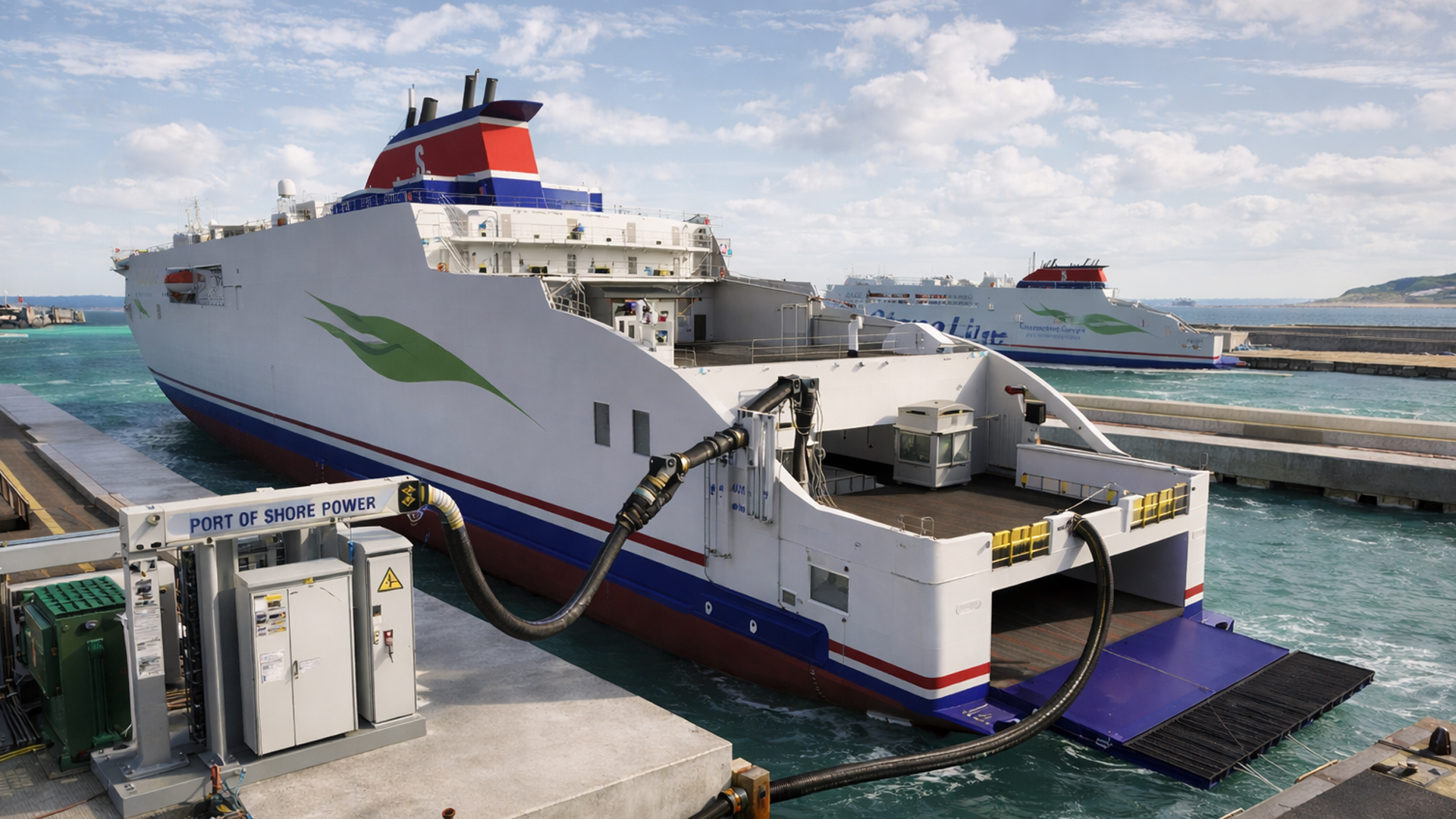
Visualisation of an electric ferry charging at a port.
What are the next steps?
Our next steps include:
- Testing digital twin federation across our air, road, rail and maritime demonstrators
- Developing design, audit and certification guidelines for federated digital twins
- Collaborating with industry partners, including national agencies
How can I find out more?
For more information on TransiT, you can browse our website or get in touch via the Contact Us page.
For industry engagement enquiries, you can contact our lead Co-Investigator for this demonstrator, Michele Sevegnani, or our stakeholder engagement manager Adam Kesby.