
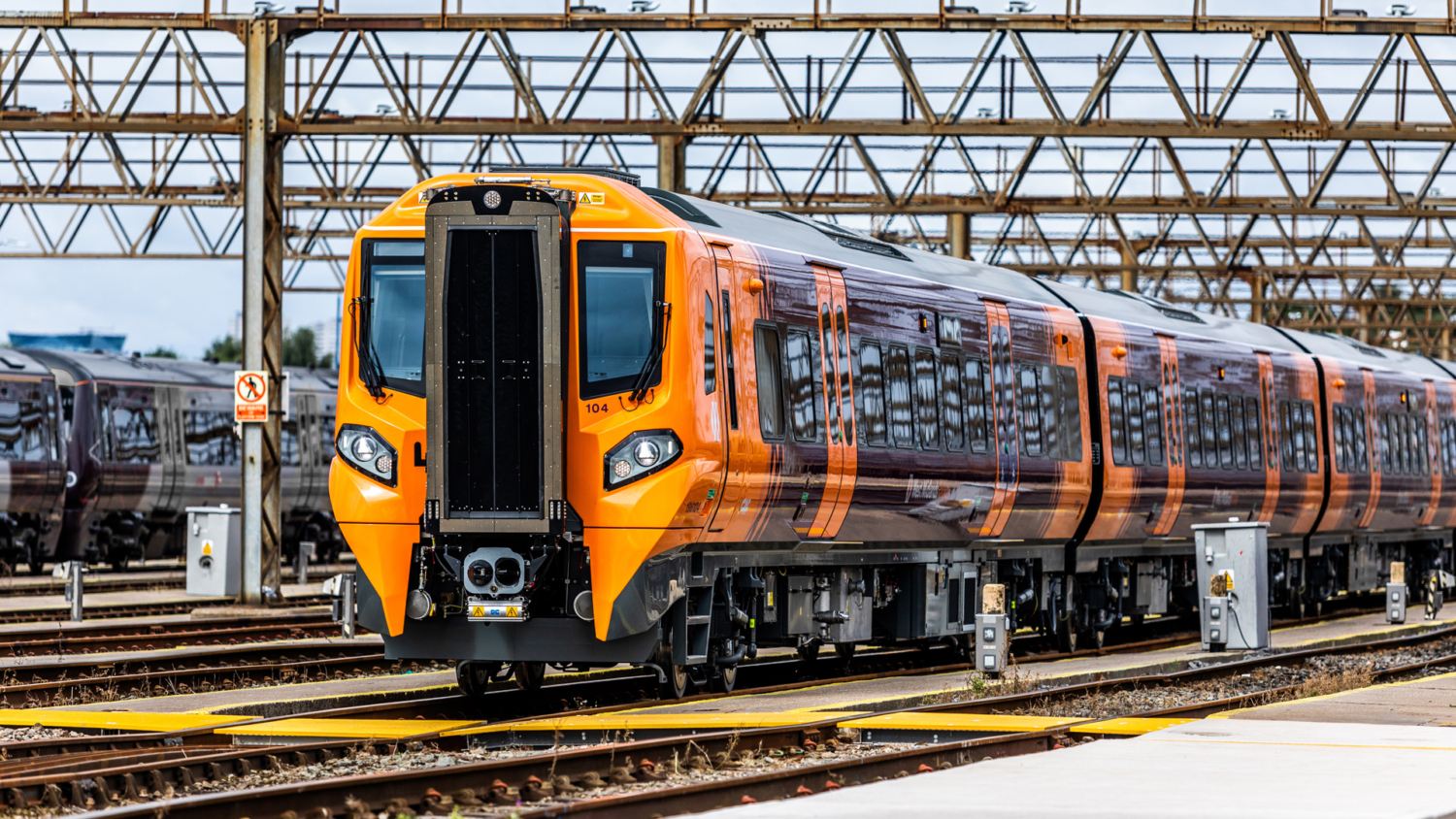
The power of systems thinking in transport
Krishnan Venkateswaran is a railway systems expert based at the University of Birmingham’s Centre for Railway Research and Education. We asked him about his work at TransiT.
What’s your role at TransiT?
I’m a co-investigator at TransiT and my role is to test and validate the digital twins we develop. I’m part of the team at TransiT’s ‘Challenge-Led Demonstrator 2’, which is developing a passenger transport digital twin in the West Midlands. My role also involves supervising TransiT’s postdoctoral research students and senior research fellows here in Birmingham, and providing subject expertise where needed.

TransiT Co-Investigator Krishnan Venkateswaran.
What’s your specialism?
My specialism is railway systems engineering, which broadly involves testing how different systems integrate and work together. For example, we think of the railway as blocks of machines and people working together to produce seats for people to travel on. A systems engineer looks at how you integrate people with the machines and how machines talk to other machines – and then how the entire system works. And when a new element is introduced to this system, the machines all need to learn about this new thing, or you need to make it compatible with all sorts of machines.
In TransiT, we are building multiple digital twins of the UK’s transport system to identify decarbonisation pathways – and systems engineering will be critical to ensure these different digital twins can all talk to each other and work together.
Testing and validation is especially crucial for TransiT, because we’re identifying future decarbonisation scenarios which may not exist yet – and sometimes we have to use synthetic data for that.
Krishnan Venkateswaran, TransiT
What is validation and why does it matter?
Validation is how you know something is fit for purpose – that it’s actually going to work as you intended it to. For example, you can build software or hardware to solve a problem. But if a button or user interface doesn’t work, or if the data being produced isn’t validated, then you basically get bad outcomes. There’s a saying that computers work on garbage in – garbage out, or gold in – gold out. This is the idea of validation. It’s very simple, but powerful, and is about validating your assumptions and inputs.
Testing and validation is especially crucial for TransiT, because we’re identifying future decarbonisation scenarios which may not exist yet – and sometimes we have to use synthetic data for that. This is artificially generated information that mimics real-world data and is used in computer modelling. So, we need to validate that data against real world ontologies, assumptions and / or practices – so it is representative of the real world.
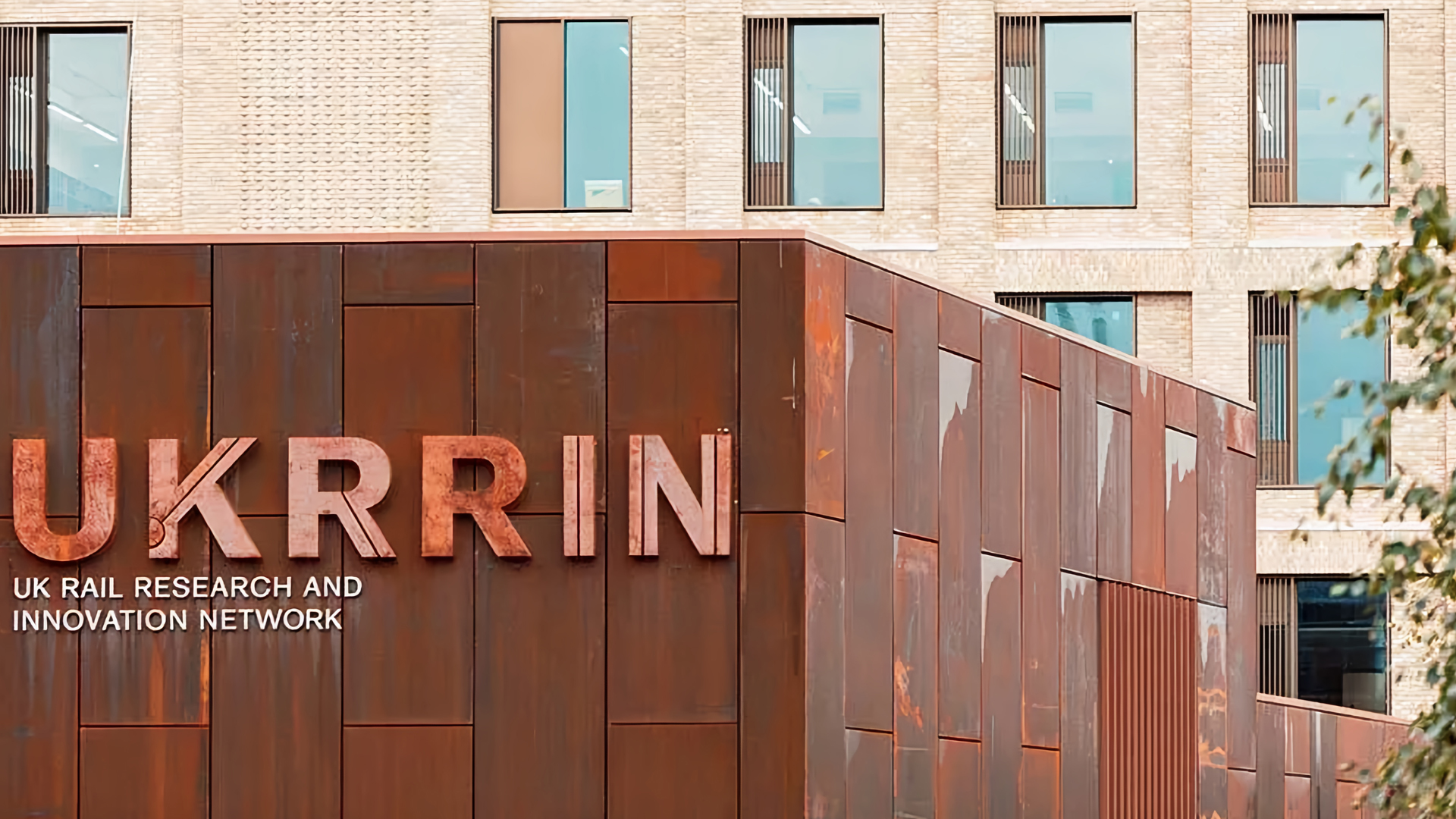
The Birmingham Centre for Railway Research and Education (BCRRE) is based in the UKRRIN (UK Rail Research and Innovation Network) Building at University of Birmingham.
What’s your background?
I have a Master of Science degree and a PhD in Railway Systems Engineering from the University of Birmingham. I started working in systems engineering with American company General Electric, where my work included validating software to reduce the consumption of diesel in freight locomotives. I’ve previously worked with organisations such as the Railway Safety and Standards Board, UIC, Network Rail and Indian Railways to integrate digital systems and knowledge to develop new capabilities.
What do you hope to achieve at TransiT?
I’m hoping with TransiT that we can start to unlock the power of digital twins on a national scale, with connected digital twins of our different transport and industrial sectors that all speak to each other. This ‘federated’ network will help all the digital twins improve. For example, the railway digital twin will be able see passenger flow data from local bus systems or tram networks. This could then be used to improve traffic flow and our wider understanding of the real-world context.
The power of TransiT is the idea of putting these digital twins together in a simulation tool, so we can then run decarbonisation scenarios or policies across the whole of public transport, to see how they work.
In an area like the West Midlands, this will help us validate how a bus, tram or rail network can reduce a city’s carbon emissions – when they are actually aligned.

