
Derisking air and road freight decarbonisation
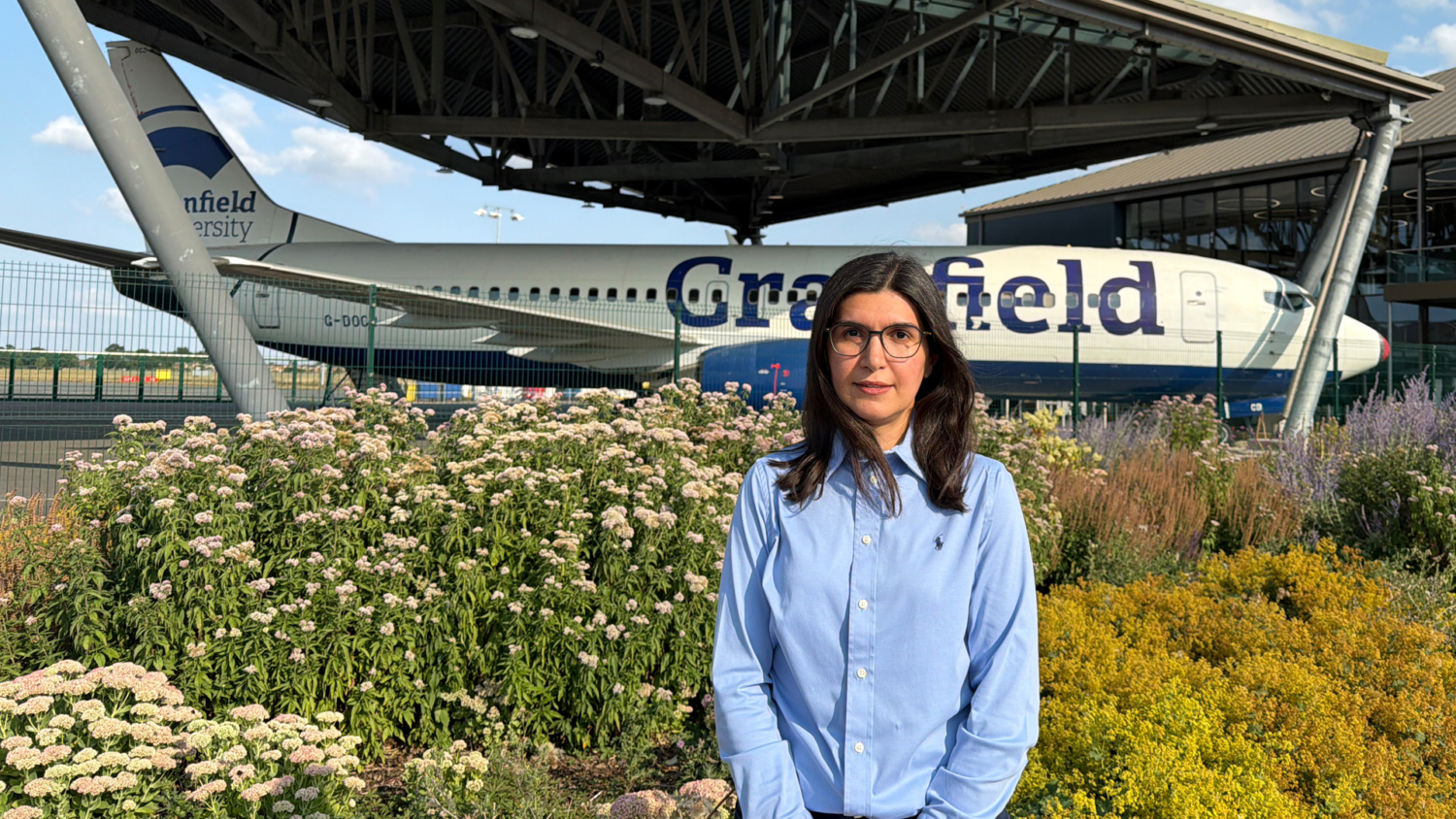
Dr Maryam Farsi is a TransiT co-investigator at Cranfield University specialising in systems engineering, cost engineering and engineering net zero. We asked her about her work.
What does your work with TransiT involve?
As part of the team, I am working on digital twinning of the Air and Road Freight Demonstrator at Cranfield. This involves collaborating with our industry partners, DHL and East Midlands Airport, to help us understand how to coordinate freight decarbonisation across both road and air transport, and how to reduce the risk and uncertainty of decarbonisation investment.
I’d like TransiT to produce strong academic research, but also deliver something that our stakeholders can use in practical ways to help with their decarbonisation decision-making.
Dr Maryam Farsi, TransiT Co-Investigator
My role is to ensure this work address the kind of questions that industry and policy stakeholders care about. This includes infrastructure readiness, fuel and energy demand, resilience, cost and carbon trade-offs – and ultimately the sequence of investment decisions that stakeholders will need to make. I also contribute to optimisation and economic aspects of the research, which is focused on finding solutions that are practical and affordable for our stakeholders.
Initially my work involved developing the framework to design and implement our digital twin. Now we’re focused on moving from digital models and shadows of our demonstrator to full digital twin, which delivers a two-way synchronised data flow into and out of the physical world.
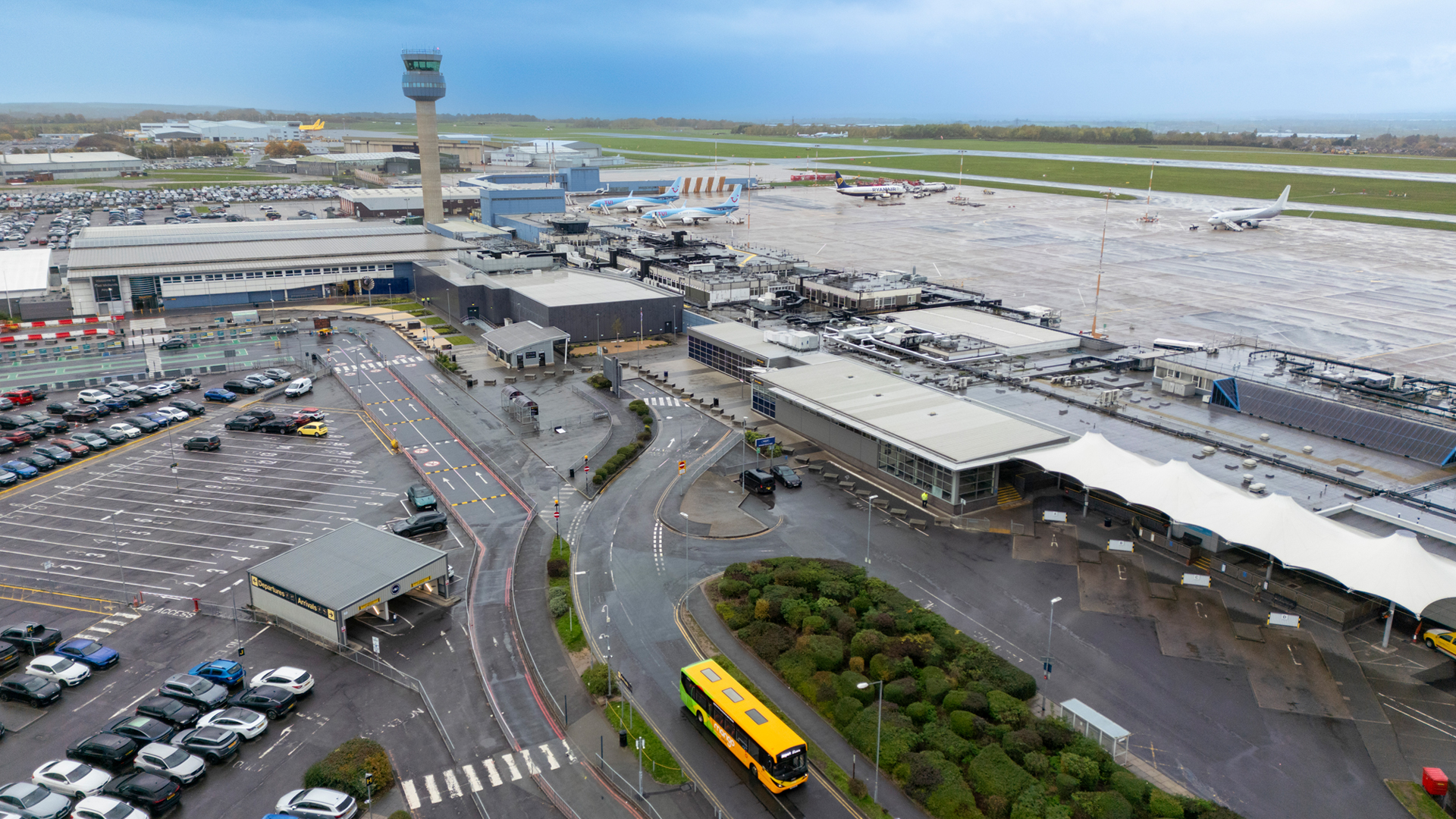
Aerial view of East Midlands Airport. Photo courtesy of Easy Midlands Airport.
What’s your specialism and why is this important to TransiT?
My research expertise is in three main areas: systems engineering, cost engineering and engineering for net zero and sustainability. This is important for TransiT because transport decarbonisation is fundamentally a system-of-systems problem. So it’s not just about looking at the vehicles, airports, fuel or infrastructure in isolation. It’s more about how they all interconnect and operate at the eco-system level, and what this means for logistics, cost resilience, policies and so forth. So my systems engineering background is really focusing on this area and to how to design a system-of-systems for our Air and Road Freight Demonstrator.
I’ve been researching digital twinning and sustainability since 2018, when I co-edited a book on digital twin technologies for smart cities. And I’ve been a member of the Society for Cost Analysis and Forecasting for about 10 years. This is a professional membership body focused on cost modelling, forecasting and risk analysis. I’m also working with the Association of Cost Engineers committee in the UK. And I am part of the BSI Estimating Specification Standard Development Group, which has been developing a new standard for cost estimation.
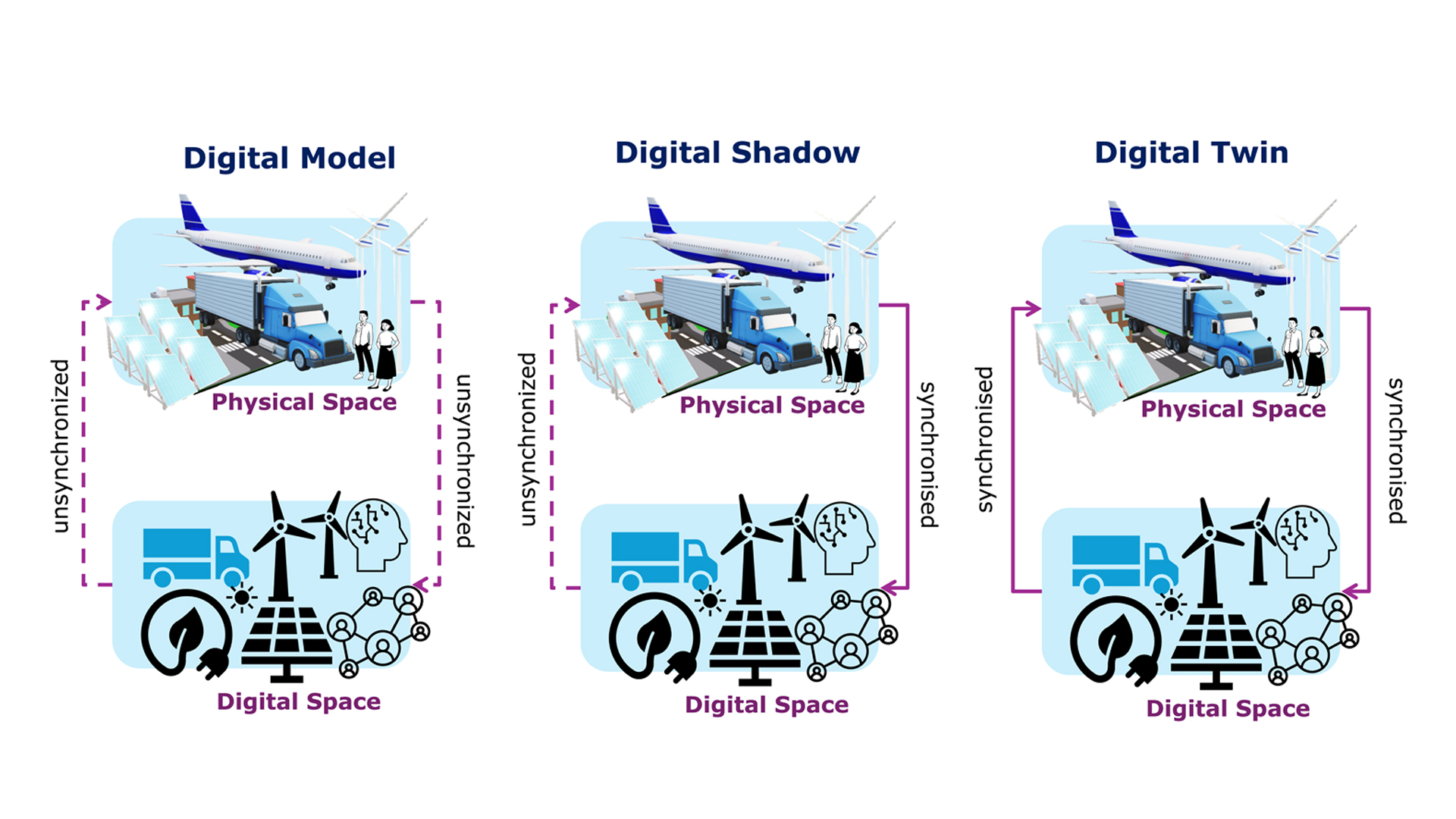
Cranfield University’s graphic on digital models, digital shadows and digital twins.
What’s your background?
I did my Masters degree at City, University of London and PhD at Imperial College that were focused on structural mechanics and complex engineering assets. But over the past 15 years at Cranfield, I’ve been focused on digital twin systems engineering, optimisation, modelling and simulations, and whole-life cost and decision support. This has included looking at digital twins for predictive maintenance, anomaly detection, cost estimation and decision-making. I’ve worked with a wide range of industry over this period, including Rolls-Royce, Siemens Energy, NHS, Network Rail and many others in sectors including transport, aerospace, energy and healthcare.
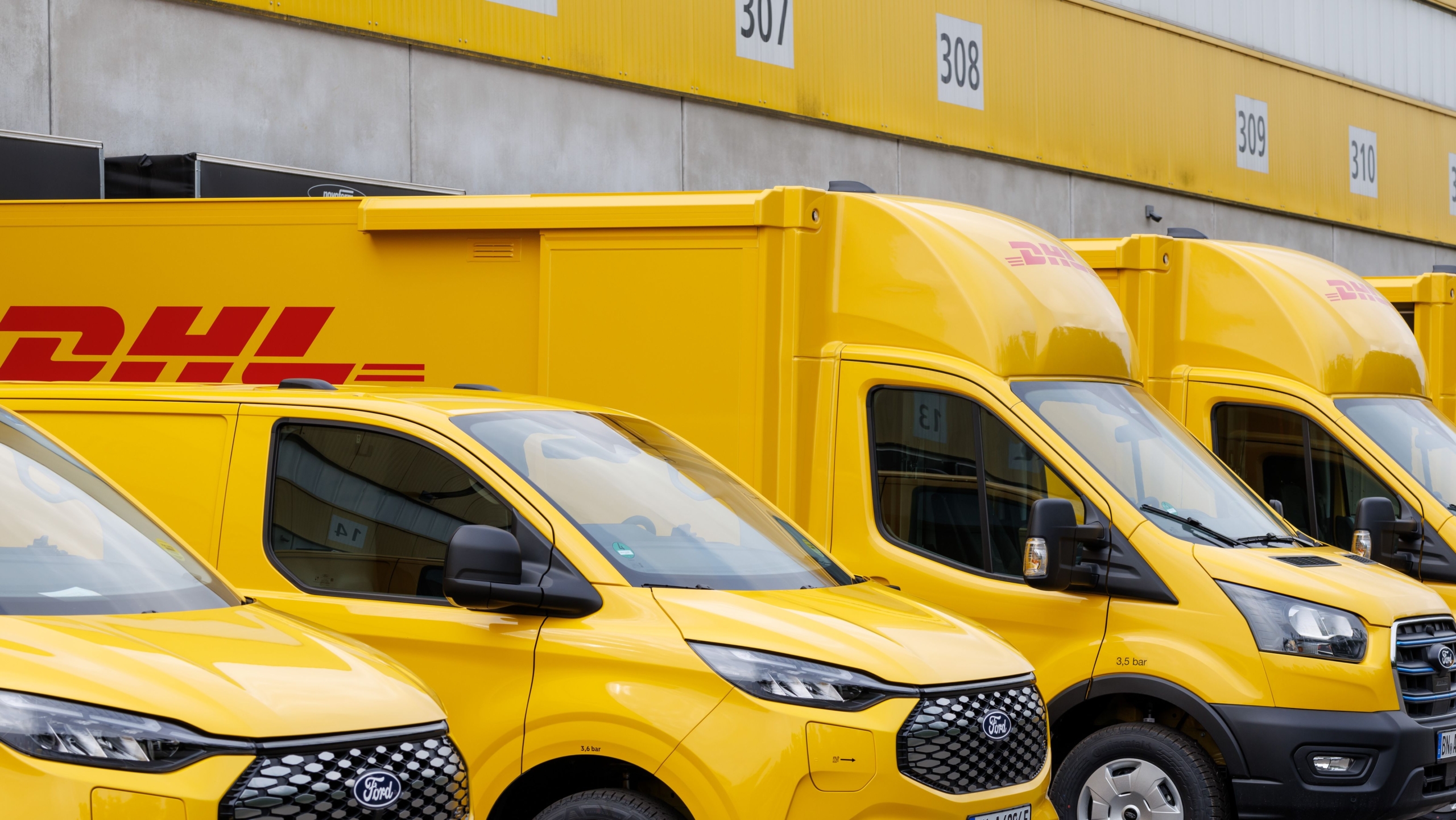
DHL vans. Photo courtesy of DHL Group.
What do you hope to achieve at TransiT?
I’d like TransiT to produce strong academic research, but also deliver something that our stakeholders can use in practical ways to help with their decarbonisation decision-making. I’d like to see digital twinning offer an innovation solution for decarbonisation that industry can recognise as credible, useful and has the potential to be adopted. It’s very important also that this innovation is scalable and transferable. So for example, I’m hoping that the architecture and frameworks we’ve developed for the design and implementation of the digital twin could be used in other sectors beyond transport that are facing similar decarbonisation and net zero transition challenges.

