
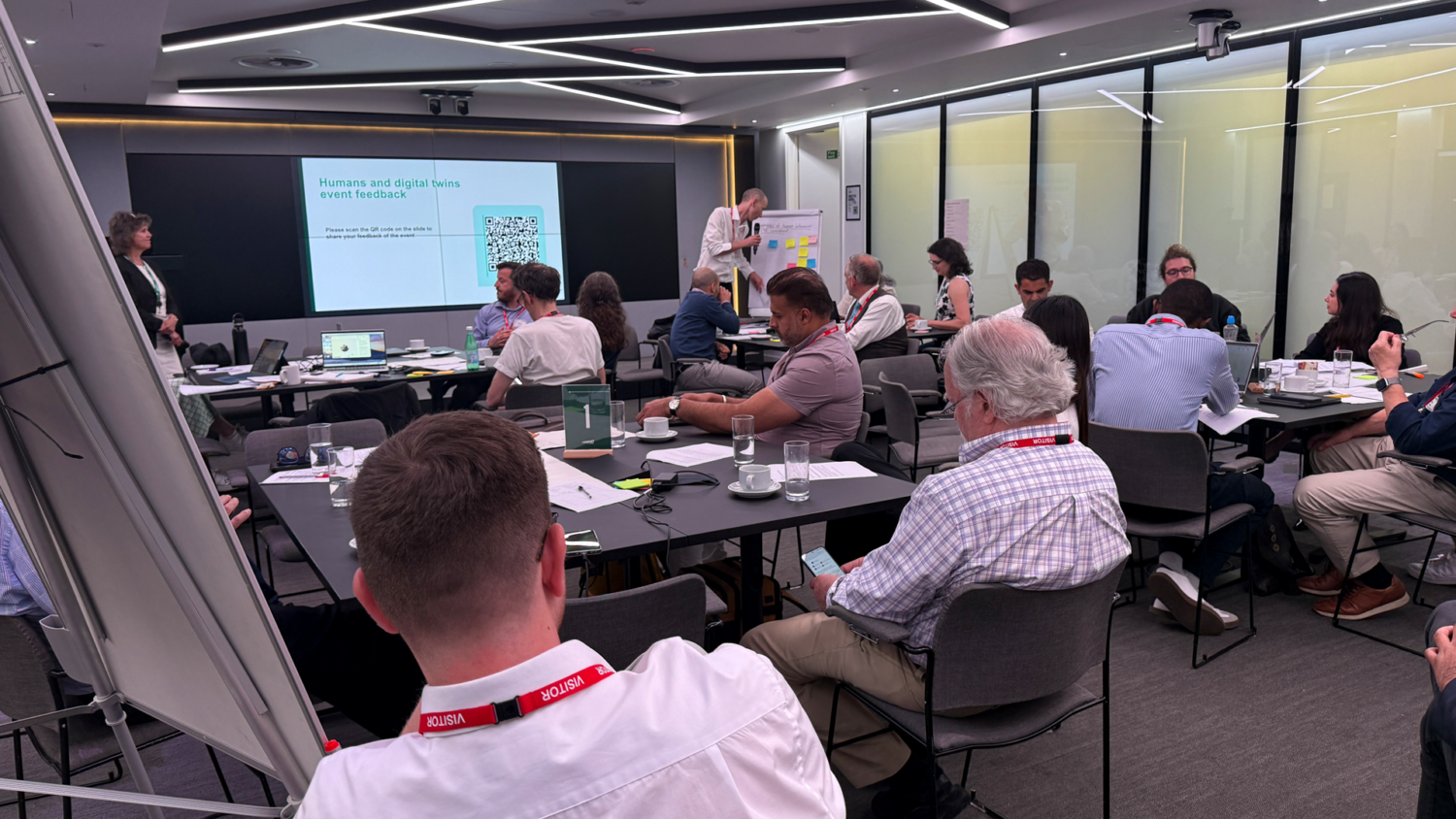
Getting humans into ‘digital twins’ is vital for net zero transport, industry event hears
Human behaviour is a critical component of the race to decarbonise transport, an industry event in London heard this week.
Guy Walker, a ‘human factors’ expert at UK research hub TransiT, based at Heriot-Watt University in Edinburgh, said: “Humans design, construct, use and maintain our transport system. So we need to put humans – and human behaviour – at the heart of the technologies we’re using to understand decarbonisation challenges and solutions. This will help make our predictions more accurate – and ensure that the tools we create are accessible and practical for people to use.”
Professor Walker was speaking at ‘Humans and digital twins in transport decarbonisation’ – one of five events being hosted for TransiT by Connected Places Catapult, the UK’s innovation accelerator for cities, transport and place leadership.
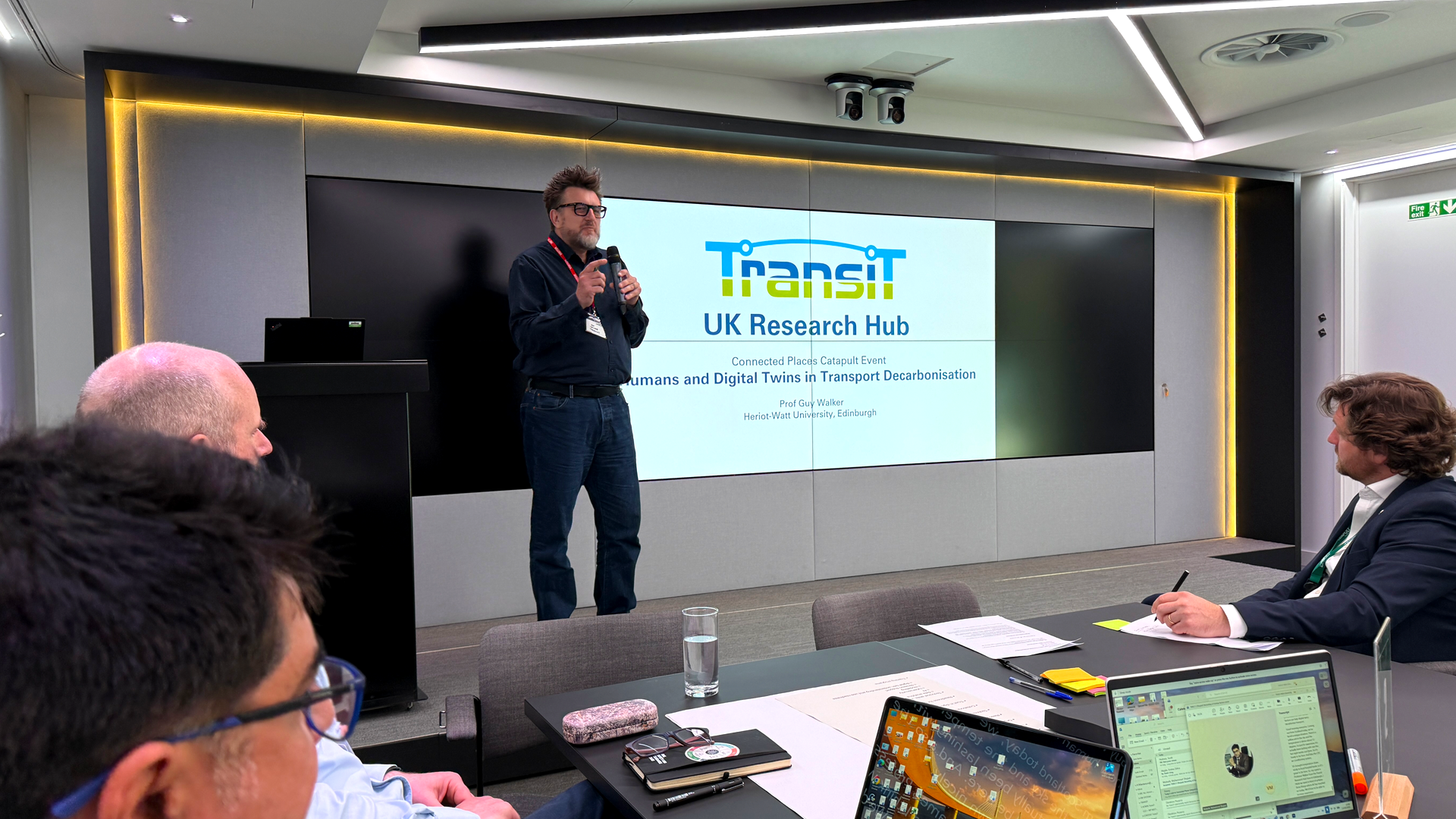
Professor Guy Walker presenting at the event.
TransiT is using digital twins – digital replicas of the physical world – to identify the least-risky, lowest-cost routes to zero emission transport in the UK.
Opening the event, Ali Nicholl, Data and Digital Strategic Engagement Director at Connected Places Catapult said: “Digital twins offer a powerful way to test options, understand consequences and support better decision-making as we work towards transport decarbonisation. But technical capability on its own isn’t enough. If we don’t pay proper attention to how people behave in transport systems, how they interact with models and interfaces, and whether organisations actually have the skills and readiness to use these tools well, digital twins risk being under-used, mistrusted or sidelined.”
Human factors is a science combining engineering and psychology that focuses on designing products, systems and infrastructure for human use.
Around 40 invited guests from sectors including transport, energy and technology took part in the event, which included a workshop session exploring three key themes.
These were: How ready are organisations and workforces to adopt digital twinning?; What human behaviours are key to decarbonising transport? and How can we remove barriers for disabled people in the transport transition?
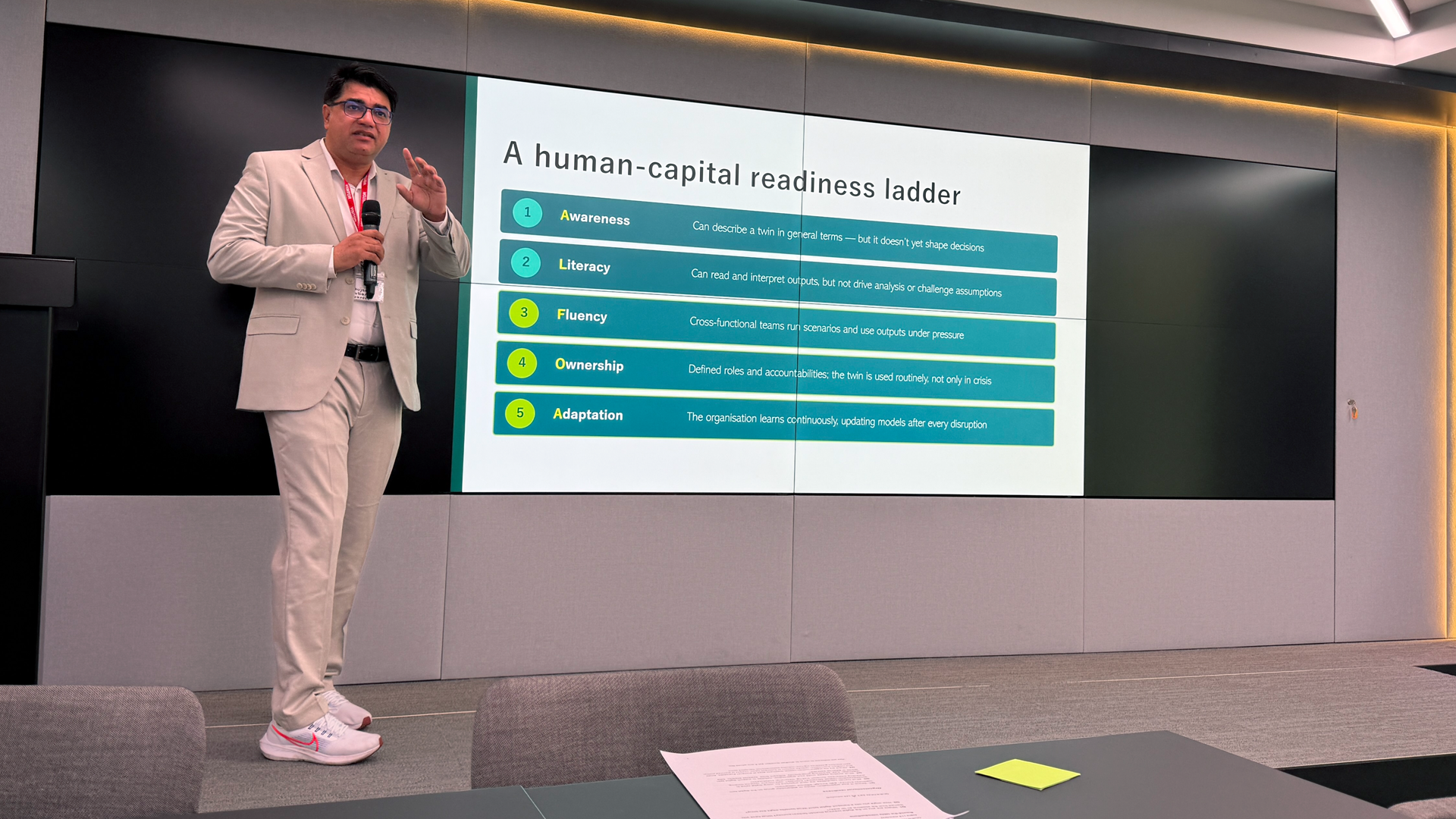
Dr Shujaat Mubarik at the TransiT human factors event.
Dr Shujaat Mubarik, a TransiT researcher and supply chain expert at Heriot-Watt University’s Edinburgh Business School, led the organisational readiness workshop theme. He said: “Because digital twins change how decisions are made, adopting them isn’t just a technical challenge. It also demands new skills, mindsets and ways of working across organisations. That’s why it’s vital to raise awareness of the human resources aspect of digital twinning and the kinds of behavioural capabilities needed.”
Professor Kate Sang, a Professor of Gender and Employment Studies at Heriot-Watt’s Edinburgh Business School and a TransiT co-investigator specialising in equality, diversity and inclusion, led the ‘just transition’ workshop theme. She said: “Definitions of disability are often focused on the person and their medical conditions. But many disabled people argue they are disabled by barriers in the environment and in societal attitudes, rather than their condition. For example, lack of bus timetable information in Braille could disable people with visual impairments. As decarbonisation brings new changes and challenges to transport, it’s vital that we increase our focus in this area.”
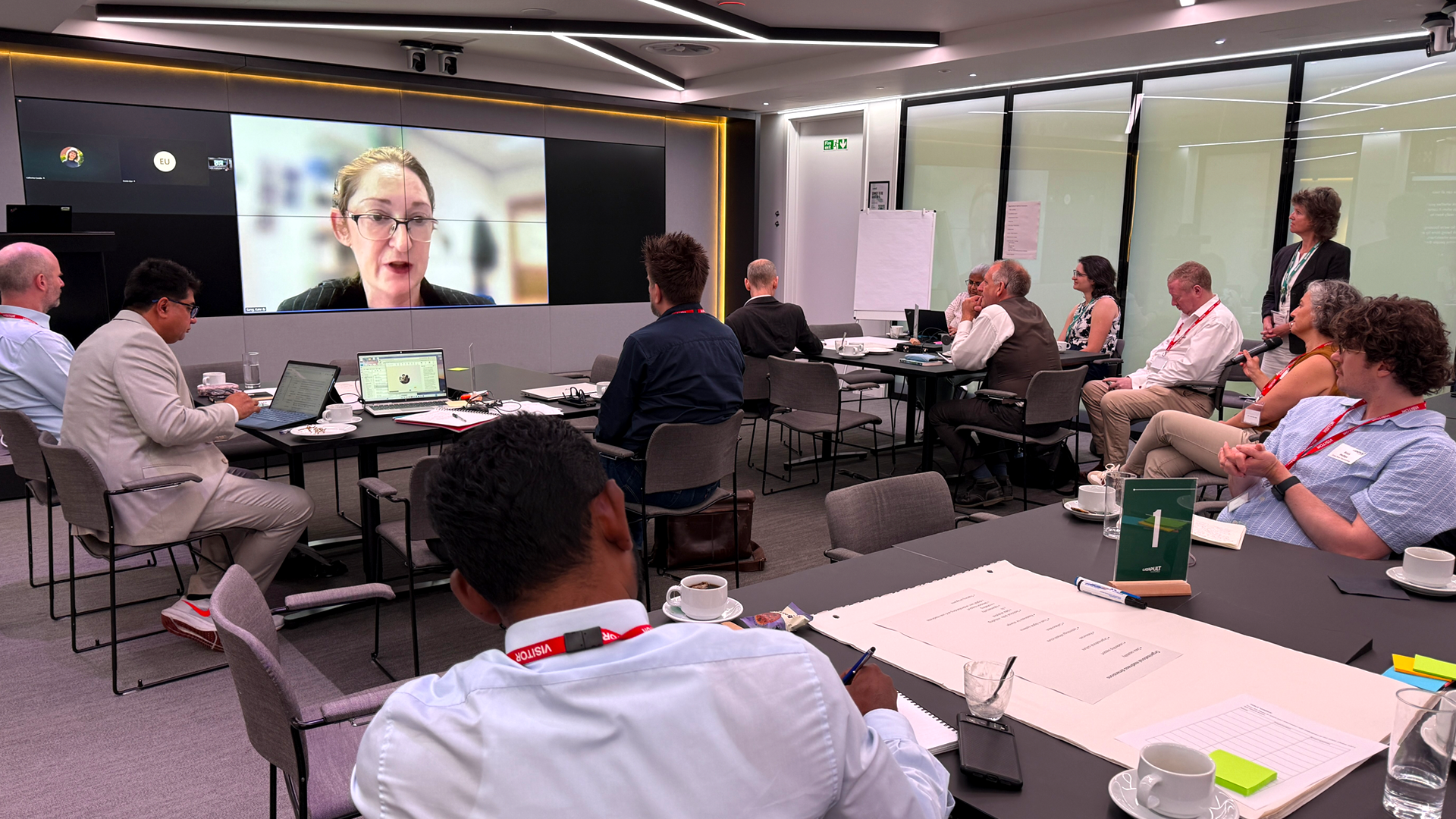
Professor Kate Sang answering guest questions at the event.
Other areas of TransiT research will be highlighted in another two Connected Places Catapult events. These are ‘The cyber-physical transport architecture of the UK’ and ‘Designing for federation in digital twinning for transport.’ The workshop series will culminate in a roundtable event at the House of Lords in October that brings together policymakers, industry leaders and researchers.
TransiT is a collaboration of eight universities and almost 70 industry partners, jointly led by Heriot-Watt University in Edinburgh and the University of Glasgow, and supported by the UKRI Engineering and Physical Sciences Research Council (EPSRC), the main funding body for engineering and physical sciences research in the UK, and by the UK government’s Department for Transport.
Connected Places Catapult connects businesses and public sector leaders to cutting-edge research to help showcase, develop and scale new solutions that drive growth, spread prosperity and reduce carbon emissions.
The UK government is committed to developing national capability in digital twinning to accelerate economic growth, net-zero goals and infrastructure resilience.

